Leaderboard
Popular Content
Showing content with the highest reputation on 08/04/2019 in Posts
-
BBB Day is here for me! Arrived this afternoon and I am excited to get started. This will be my first build, I have been looking over the forums a lot lately in preparation for the arrival. I am planning on starting on the helmet first, I will have lots of questions along the way. So it begins... Armor : Authentic Props Soft Hand Guards : Authentic Props TD Clips : Authentic Props Holster : Authentic Props Gloves : Authentic Props Canvas Belt : Authentic Props S-Trim : Trooperbay Helmet Dark Lens : Trooperbay Neck Seal : Darman's Prop's Undersuit : Amazon Boots : Imperial Boots E-11 Blaster : Quest Design Canada - pending Fans : banggod.com Comms : Not sure yet2 points
-
At a Troop yesterday I had a discussion with a fellow Garrison TK about the strength -- or lack thereof -- of Shoulder Bridges. It occurred to me that the method I used to beef up the Bridges from my build might be useful as a standalone How-To article. Shoulder Bridges are perhaps the most fragile part of TK armor, so it's always a good idea to reinforce them in some way. Also, since the underside of the Bridges is basically hollow there's nothing there to glue to. Most builds I've looked at fill in all those hollow spaces with slivers of ABS glued in to add both strength and gluing surface. I decided to try something different. My plan was to cover the entire underside of the Bridges with a strip of thin ABS cut from a For Sale sign I picked up at Lowe's for $1.99. First, though, I needed to trim the Bridges down a bit to remove excess edge. I have AM armor, which comes nicely trimmed, but there is a bit extra left on so trimming these was my first step. The AM Shoulder Bridges are already curved (almost perfectly, for that matter), so using the score-and-snap method wasn't an option and I relied on my trusty Lexan scissors. Notice here that I'm not cutting all the way to my line. That's because I'll be gluing ABS to the entire underside and I want more surface to work with. I'll trim them to their final size after the gluing is all done. I had already cut out the ABS from my For Sale sign -- again slightly oversized -- so gluing started by attaching the ABS to the Bridges at the middle. The reason for this is that all the critical gluing of the ABS is mostly around the edges, and I wanted a solid center all the way down the middle for strength and rigidity, and to support the thin ABS. To do this, it only takes a dollop of glue on the center of each "rib" where it'll make contact to the ABS sheet. I'll use something different gluing the edges, but I'm using E6000 here for the longer working time and adjustability. With the glue dolloped on, I pressed the ABS into place and added a series of small clamps down the center and set the Bridges aside to dry. A couple things to keep in mind if you decide to do this --- 1) First, shape the Bridges as closely as possible to the shape you want them before starting this. Yes, you can still bend them afterward but it's not quite as easy, so bend them to shape now. 2) When you clamp on the ABS, ensure that you keep the curve intact the way you want it while the glue is still wet. This is pretty easy to adjust, even with the clamps on. But once the glue is dry it will hold the curve, so you want the curve to be right where you put it. 3) I've talked a number of times in my official build thread about how you can work with things glued with E6000 after only a few hours without waiting for a full cure. That doesn't apply here. You want the glue down the center to fully cure before proceeding. Why? Well, E6000 is strictly evaporative and needs air to cure. The inside of the Bridges won't have air circulation once the edges are glued. So let that glue cure at least the full recommended 24 hours. OK, lecture over. To glue around the edges I'll use Plastic Weld, which does exactly what it says. This glue is very thin, cures very quickly, and makes a permanent, nearly invisible joint. It's also easy to use since capillary action does most of the work for you. Work in small sections at a time -- about three or four ribs length -- from one end to the other. I alternated sides. Dip the brush into the bottle, apply liberally to the edge (the slightly oversized ABS forms a little "shelf" that acts as a guide) and capillary action instantly sucks the glue right into the joint. Brush on a bit more in the same spot, and again it'll be drawn right in. Keep doing this till no more gets sucked in; at that point the joint is fully filled and you can apply your smallest clamps. You only need minimal pressure, and you only have to leave the clamps in place for a couple minutes. The glue works that fast. Important note: Be extremely careful with this stuff! It will instantly start fusing any plastic it touches, including your armor, so get it and anything else out of the way. Keep a cloth or paper towel handy for drips and spills -- it will also start fusing the plastic laminate on my worktable, for example -- and wipe up any spills immediately. Note how I keep the glue bottle in what I call my Tray Of Isolation that I use for glues and other caustic chemicals, plus I have it nestled into a hole in a piece of wood that prevents the bottle from tipping. Then I just kept working down around the edge, alternating sides, until I'd gone entirely around the Bridge. Done? Nope. When this kind of glue cures, it shrinks ever so slightly, and if you look at the glue joint you might see tiny gaps that look like bubbles. Go all the way around once more with your brush applicator, adding a second line of glue. You'll see it suck right into those little gaps. Once you see no more tiny gaps, then you're done. Set it aside for an hour or two. Yeah, the glue is dry, but you want it to fully cure. An hour or two is more than enough, but best to be sure. Now, trim that oversized ABS right up to the edge of the Bridge plastic with a sharp knife, and sand the edges smooth. This is a straight edge, so either use a sanding block, or better yet a full sheet of paper held flat to your work surface. I did a quick rough sanding with 150-grit just to level the edges and bring them to the final size, then followed with 220-grit, then 320-grit for a really smooth edge. And here's the magic: Because this is a welded plastic joint, there is no appreciable glue line. Seriously, take a look: There you go. The Bridges are strengthened from one end to the other, and you have a smooth, flat gluing surface ready to go on the underside for attachment to the armor. Which, by the way, we'll do after making an adjustment to the armor. Strengthening the Shoulder Bridges is only part of reducing their fragility. The second part is how they're mounted to the armor. Here, you can see that although the shoulder extensions at the top of the Chest and Back Plates are trimmed to length and shaped to my shoulders, the ends of those extensions weren't quite in the same plane. You can see what I mean with the armor on my mannequin. The armor feels good on and fits just right, but no way those Bridges are going to lay correctly on that. Sure, the elastic hold-down straps will force the Bridges into the correct position when you wear the armor, but that also stresses the Bridges by twisting them unnaturally. But you can fix that. Leaving the armor on the mannequin, I reshaped those extensions by heating them with a hair dryer. (I'm terrified of using a heat gun, but a hair dryer works great on small, thin areas like this and it's far safer.) Essentially, I just heated up the ends of those extensions, then twisted them until they lay in the same plane with one another. Once I had the left shoulder nice and planar, I did the same thing with the right shoulder. When finished, the bridges will lay perfectly over the top. Now, it was just a matter of lining up the Bridges to center them over the shoulder extensions and making a few registration marks, then removing the armor and gluing the Bridges to the Chest Plate over on my workbench. This is another critical glue joint, by the way, so allow the full curing time for the E6000. All right, let's take off the clamps, reattach the shoulder strapping and put this back on the mannequin and see what we got. Nice. Now, just a little cleanup for some E6000 squeeze-out, add the thin elastic hold-down loops for the backs of the Bridges, and you're ready to enjoy the strongest Shoulder Bridges ever. A.J.2 points
-
I would echo Andrew's thoughts on Rustoleum. Although it can be a bit pricey, this is what I use for all projects when painting plastic of any sort: If you feel ambitious, I would also suggest sanding down all the surfaces to be painted and them cleaning it thoroughly before applying it. This will rough up the surface a bit and give the paint something to better adhere to.2 points
-
Like Alay, I have built multiples of both kits and each has their pro's and cons. The AP of which I own is thicker than the RS kits Ive worked on, and is definitely a different white. AP has changed the ABS they use in recent years so those kits seem whiter again than their older version. AP: Pulls are still pretty darn good and not as soft as some others makers out there, but the RS kits are a touch more detailed. The stand out differences are The helmet as mentioned, AP is a cleaned up version but still cast with movie lineage as is most of the suit. The Ab plate is also cleaned up and I believe cast from an RotJ suit originally. more symmetrical and aligned. The fore arms and Biceps are identical as the suit cast from was missing several pieces, these are a cleaned up version. Both shoulder Bells are identical. Originally the back and butt plates were joined but Mark has since separated these and uses individual molds. Overall AP is a more sanitized version but a very hardy and quality kit. RS: Not as white as the AP kits pulls are sharp as the ABS is not as thick. The Helmet is full of original detail all paint runs etc bumps and lumps very visible. Most of the suit is cast from an original so both the arms are different from each other. (number of dimples along the ridge of forearms and differing length, different shaped biceps) Ab plate: is slightly twisted and asymmetric compared to AP Legs both have a fair difference in shape around the top. Shoulder bells are both different in shape. There are more differences but I think you get the idea you cant go wrong which ever you decide, cleaned up idealistic, or warts and all original they both look impressive.2 points
-
He is not using an original ANH suit and I can guarantee that.... he is a re-caster, plain and simple. He has a reputation of copying other armorer's hard work and passing it off as his own at a cheap price. I can speak of this from personal experience, Chad. Before I was aware of the FISD and 501st, I bought one of his kits. During my research, I came across these sites and found out that because of the differences it was not eligible for even basic approval (the helmet alone is GIGANTIC). I ended up building it anyway (for the experience) and then sold it on eBay as a "Halloween costume". Lesson learned. You get what you pay for.2 points
-
As Hassan mentioned, priming is the key to paint adhesion. After masking off the hardware (use blue painter's tape), make sure it is super clean and free of dust, etc. Know in advance that it will take several cans of paint, and that it will take some time. Here are some tips: 1. After priming, let it dry for 3-6 hours. 2. Apply the paint in THIN coats. If you put it on too heavy, it will run and cause drips. 3. Although it may seem dry and ready for a second coat, enamel paint needs to "cure" after each coat for durability. Don't be in a hurry. 4. Before removing the painter's tape carefully cut around the edges with an Exacto or razor knife. Otherwise, you run the risk of peeling off the paint from the surrounding areas.2 points
-
I think any spray paint would do, but I would recommend primer as well. It should really help with adhesion. Top coats should help add a lot of protection, As Alay said.2 points
-
NICE job on this Anovos kit, Andre! You should have no major issues for Level 2, but for level 3 there are a few which the D.O.s will discuss with you. While waiting on your application, I would suggest raising your ABS belt. Reference images I would also recommend posting up photos of your wrist openings and a close-up of the bottom ear screw of your helmet. They will probably ask for these, and it should only take a few minutes. All 3 screws on each ear should all be the countersunk flat headed slotted type. For some reason Anovos uses the correct ones for the top two but not the bottom ones. Reference images From a comfort and aesthetic standpoint, I would also suggest the following: Trimming down that point at the top of your forearm will not only look better, but it will help keep it from snagging on your under-suit and poking into you. Reference images You may want to think about cutting down the back of the thigh tops. It will also keep those sharp points from snagging your under-suit as well as give you a little more mobility. If they "click" when you walk you will know what I mean. Reference images See you Expert infantry soon!!2 points
-
Can tale up to a week or two, please standby the DO's will be here in due course2 points
-
Hi all, Firstly, I’d like to say that Low and higher brow heights are perfectly acceptable and all members are welcome in the legion. I would just highlight that some appear to reflect Stunt or Hero/Promo troopers. The intention of this post is to share educational reference photos with new and aspiring troopers. Based on watching ANH, viewing the many reference photos and additions behind the scenes and historic photos, there is a clear direction regarding various brow heights in ANH. In the spirit of the CRL, this guide would help improve uniformity across the legion. For those that favour a low brow, I would highly recommend checking out the Hero* or Promo Trooper as an ideal option. *please note that not all Hero helmets had a low brow. Below is the Promo Trooper. This features a hero helmet (this is different to the Stunt helmet) and is an iconic look, featuring a low brow (brow trim essentially ‘on’ the top of the eye sockets). There is essentially zero gap between the bubble lenses and the brow trim. There were just six hero helmets made for ANH, made in gloss ABS, intended for close up shots; Luke has a very similar look; Han, on the other hand, had a clear gap (seen here left of shot) 50 Stunt helmets were made for ANH. These were made from green HDPE plastic, then primed and painted. The majority of TKs seen in action and group shots in ANH were Stunt helmets and had a visibly different appearance, including a longer painted ‘frown’ with (for the most part) 4 ‘teeth’ either side, 3 screws per ear rather than 2, flat lenses rather than bubble and (for the majority seen on screen) had a consistent gap between the top of the eyes and the brow. First up is a photo taken outside Shepperton Design Studios and shows approximately half of the 50 Stunt helmets primed and ready to send to the studio. The brow height is consistent across these helmets, each having a clear gap between the eyes and the brow. Note below that perhaps 2 or 3 of 26 helmets have a slightly lower brow. On to screen used, there are a few lower brow stunts featured through ANH, however they are certainly outnumbered by the conventional look. Note the same scenario from ESB (re-using ANH Stunt helmets for the most part); Even quite a few Hero helmets, including Han’s, had the usual gap. I hope that these reference photos help to show the difference with various helmets. This post,and the information included, comes from a passion for the wonderful character that is the Stormtrooper and is not intended as a negative view on those that choose the low brow. Both have their place in our character lineup. I would simply suggest considering the hero or Promo Trooper as an option for those that prefer the low brow. Best wishes Dan NB - credit to StarWarsHelmets.com for a lot of this information. I’ve learned a lot from there over the last couple of years.1 point
-
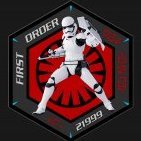
For the First Order! It was a long wait with a short build time. I’m so excited to be an official 501st Stormtrooper! Thank you everyone for your support and build threads! In memory of FN-2199 (Nines) I received my TK# of 21999. I’ve also updated my user name from FirstOrderConcepts to NeoNines. Lets get trooping!1 point
-
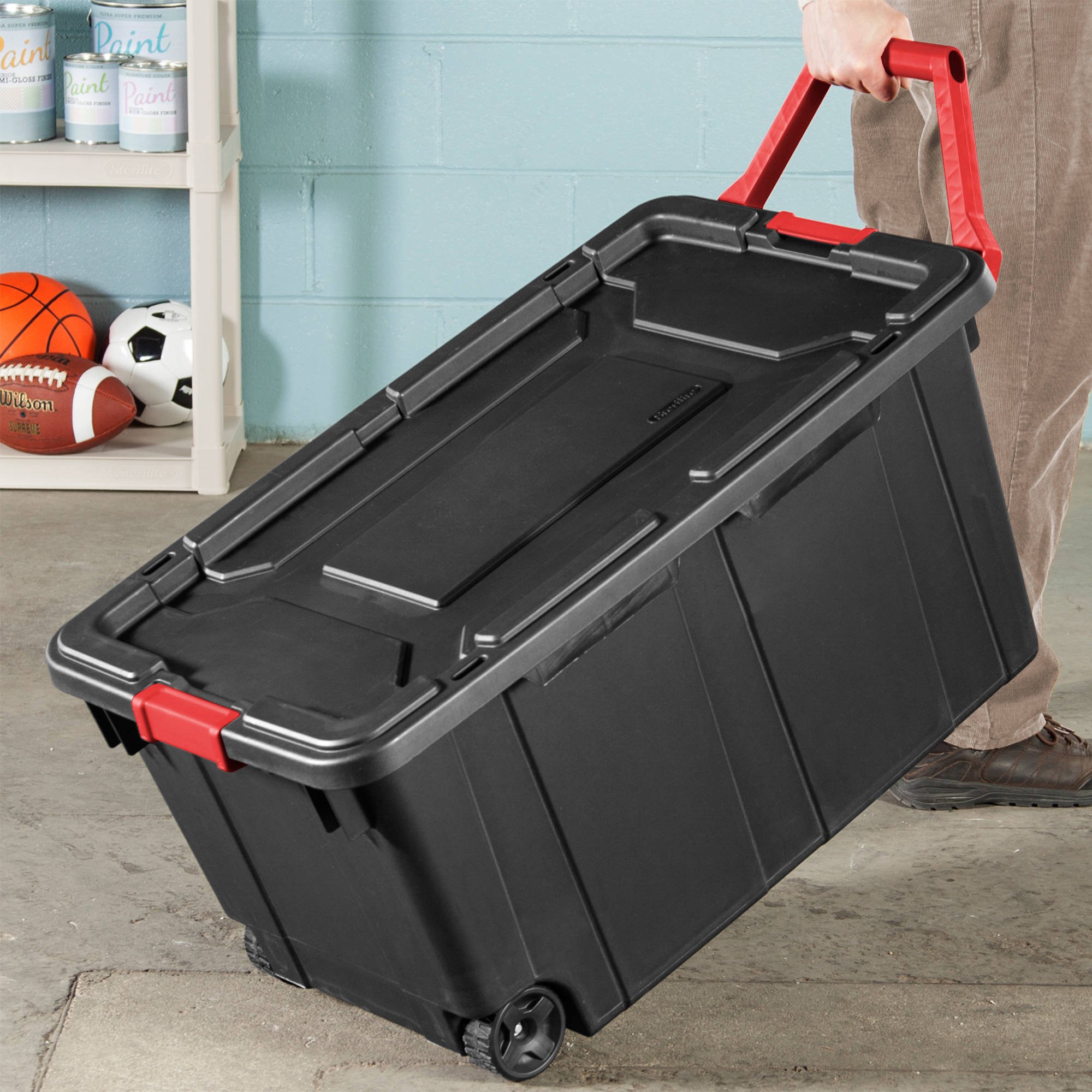
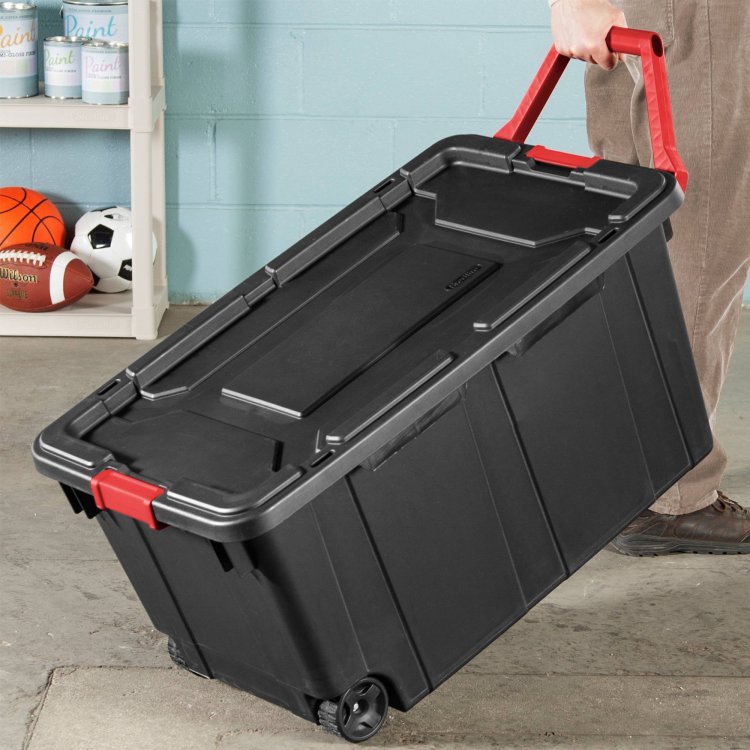
Just bought this 40 Gal tote. I would like to eventually add lining / padding inside, so the armor can be well protected. What do you guys think? Great size overall, or? Opinions, ideas? Let's see your tote. I wanted to fit eveything inside, and for about 24 dollars, I thought it was decent. It has wheels, and it isn't heavy. #MoreProgress
 1 point
 -
Facing the face plate from the outside, the left side decal on photo goes left, basically the decals are positioned properly on the sheet Also make sure to use the water/soap technique to apply the grey decals to avoid any air bubbles, just put a very tiny drop of dish washing soap in a bowl of water, wet surface of helmet I actually dip decals in the water apply on helmet then gently with your finger squeegee out water from center to extremities. For the round circles for the AB buttons apply with pressing down heat up with blow dryer then press down, they will perfectly comform to bump will look like paint.1 point
-
Absolutely not, so get out there, show off that great build and have some fun!! As Sha Sha mentioned, you will be doing upgrades for months to come. One way to find out what sort of adjustments you will need is to simply walk around your house/yard wearing your armor (and actually trooping, of course). I would suggest not cutting out the entire back at first, but rather do it in stages until it is comfortable. If you haven't trooped yet, I have a thread that will give you a few pointers: https://www.whitearmor.net/forum/topic/39382-your-first-troop-a-few-tips/1 point
-
Thank you Dan, excellent post. !!1 point
-
If good enough for centurion, that's good enough for me! Thank you for your answer. A little trim and some sanding so far, lets see what the DO adds, long weekend next week so perfect timing!1 point
-
Thanks for the detailed feedback JustJoseph. I actually use your helmet screws and rivets so they're definitely movie authentic. I received the advice on the forearm top trim from TKSpartan when I posted a pre-approval check and will trim it. Thought to get all your expert feedback first then do all the fixes in one go. Will post pics once all the fixes are in soon One slight caution I have is the forearm opening trim. I do have a little bit of return edge showing still as I have long forearms so the gap between hand plate and wrist looks big. I re-sat the hand plate (also yours btw ) and it looks a bit better (not too much black). My question is can I just file down the raised edge but leave the length or do I need to trim it back that 2mm so that there's absolutely no chance of a return edge? My worry is that I'm pretty close to looking weird with the wrist or elbow gap as in the before-after pics below. Before After PS Just realized that the pics look almost identical other than the hand plates.. lol. If you see the slight angle of the sniper knee you'll see they're diff pics take n on diff days, not moved hand plates in photoshop or something...1 point
-
Those photos look great!! Sorry for the trouble, but could you please also post new left and right side arms raised photos showing the fixed gap? You're almost there, Jesús!1 point
-
I personally wouldn't let higher level applications keep me from trooping but it's a personal choice. As Joseph pointed out, mobility cuts are fine as long as they don't go past the ridge. From the CRL (L3 for shins). Any mobility cuts on back of piece do not go past raised ridges You can go and look at past EIB and Centurion approvals to see many examples of folks who got L3 with mobility cuts. And as you'll discover, armor is never truly 'finished'. You'll continue making small adjustments and improvements.1 point
-
If you really need to trim those, Greg, I would keep the cut lines above the raised ridges (as seen below). You have a super nice build there and hopefully you will be aiming for Expert Infantry and then Centurion. If you cut below them that would eliminate you from even applying. While some of the costumes in ANH had those backs cut out, many did not. (I guess it depended on the individual actor). One thing I would suggest is that you sand the edges really well, which will help them from snagging on your under-suit.1 point
-
Looks good to me, but for piece of mind and a definitive answer for higher level approval I suggest perhaps PM'ing the DO's: Joseph @justjoseph63 Daniel @TheSwede Sha Sha @shashachu Mike @msouza1 point
-
Looks good. Going to make a WORLD of difference for you! Hello stairs!!1 point
-
All good advice given but use a better paint than Rustoleum, there are far better brands that last longer and are harder wearing. Enamel paint is definitely something to think about. Sent from my iPhone using Tapatalk1 point
-
Actually from painting plastic for props I find industrial enamel the best, has a little more flex and it's a little thicker. I've tried acrylic but it cracks easily as does cheap enamel paint.1 point
-
Nice work there, just a couple of things. Just watch bunching with your undersuit, there a bulge coming out on your right side chest to arm gap. Your boots look very grey compared to the armor, did you paint/dye yourself, if so I'd suggest going over with another coat. Thigh cover strips should not go all the way to the bottom, should stop above the lower ridge, same on the back, stop above the lower ridge. With the shins the coverstrips go all the way up on the shin fronts, but on the back they should stop below the top ridge. Did you need the extra size on your cover strips for room? If not they are a little big. You may want to try bringing up your ab plate a little more, would give you a bit more room at the top of the thighs, make it easier to move about. You trimmed the AB plate buttons a little too far, not sure if your GML will pick up on that. Holster looks very wrinkly, I would perhaps look for a stiffer one, again it's up to your GML. Drop boxes should align with the end of the plastic belt, a dab of E6000 can stop them moving You could take a little more out of the corners of the teeth I would try to clean up some of your tube stripes, tooth picks are great for getting rid of any excess, also ideally the correct fall is Back ////////// Front, but again not an issue for basic approval If you want to make your black stripes a little straighter you can go over them with a permanent black marker You could also get rid of the extra fabric on the belt, they also normally go right side over left but not a biggy for base approval Belt could come up a bit but again not a base requirement. All in all nice work and good luck with approval.1 point
-
Small update this time. First some test fitting. Then I worked on the belt since I have not gotten to sanding the cover strips yet. Hopefully I will get to sanding those cover strips this week or next, then I can work on the arms and legs.1 point
-
Furiously working to get this kit d-o-n-e! We were out of town last week, so my plans to finish the suit then went completely out the window. But almost there now. First, to follow up on the issue I had with the elastic strapping for the brackets being too long... can you spot which one of these isn't like the others? That's the elastic from one of my own kits. Much shorter. With a quick pass of these on the sewing machine, I shortened all of them up. And here is Mr. Cricket- his name is Chris (no kidding!). Yeah, yeah, I know: "Chris and Christine". We've been together for over 20 years and have heard it a gazillion times. The strapping to the shoulders/bells was just taped together, and there were no elastics on the biceps/bells, so the bells look kind of wonky. Everything was taped together for the chest/back connection with black gaffer's tape (my white tape had disappeared), so it looks kind of odd in the back, too. But! It's all coming together, and Mr. Cricket is able to move around in his suit with no bites reported. You all know how it feels to get into kit for the first time like this. So much WOW! And he has great helmet hair, I must say. Here he is after seeing himself fully dressed for the very first time. He couldn't stop saying, "Oh WOW!" over and over again. And who can resist the allure of an e-11? So after all the fun came the final work for me. Cover strips for thigh fronts. Strapping for the chest/back connection and bicep/bells to be installed. Attaching plastic straps to chest plate. I had to remove the sniper knee and add some plastic to pop it out away from the shin because we couldn't keep the plate from digging a bit into his knee (despite adding padding to the inside of the shin at the top). Let's just say that there was a lot of final stuff that needed to be glued! This is what it looks like when I use every single set of my magnets and clamps. What a mess! After all the glue has set, I still need to paint the white rivet/screw heads on the armor. And that's that!1 point
-
Hi folks, Another step closer today. Benefits of being up at 5:30 with the baby is getting a head start on things!! Lol I used the Trooperbay Dave M style templates and a ‘special’ vintage shade of blue (thank you again, P). I was a little nervous about applying the templates in case they damaged the top coat / thankfully, they peeled off perfectly in the end. Just one coat here, carefully applied, using the paint sparingly. As you’d expect, a little bleed here and there but nothing that a gently scrape with a cocktail stick/wooden toothpick wouldn’t fix. Also, added the hovi tip mesh (although I don’t think this is overly accurate) and added the acetate lenses. Apart from the s-trim for the neck, were pretty nearly there. Please feel free to comment on the hovi mesh. Note the orientation of the stripes - see here for more information; https://www.whitearmor.net/forum/topic/44755-tube-stripes-anh-stunt-dave-m/ Tubestripes approx a pencil width from the cheeks. Lightly and carefully applied just one coat of paint, trying to avoid too much pressure which could force bleed under the template; Pre-toothpick Post-toothpick1 point
-
Waiting patiently.1 point
-
I'd just nail it with Rustoleum and then put a few clear coats on it to be honest.1 point
-
Hey Jayke! Dug through my phone to try to find some more helpful photos for ya. I've been making straps for people fairly often these days and have found some tips and tricks by trial and error haha So this photo of a buddy's Sandy strap setup gives you a good idea of how I've kinda translated the Billhag diagram over into the real world. It works great and I've got about a dozen guys and gals wearing my kits without any issues. I definitely like the double-snap system for the body connections and have never had reports of it failing during a troop. I actually set the male snaps into a piece of nylon webbing instead of ABS like the tutorial you saw (which is great otherwise!). Personal preference, but the nylon bonds really well with E6000 to the armor and can adhere to the curves of the armor better - it's tough enough that it'll never accidentally come apart, but if you REALLY needed to remove it to adjust things, you can pull em off with pliers. A lot of guys will CA glue the ABS squares in, but... then they're pretty much never coming off clean ever. Also, if you're going to do ABS squares, I would leave a lot more ABS around the snap - right now, it looks like you're bonding the actual metal snap base to your armor, which isn't ideal and kind of negates the ABS. A larger, rectangular tab or nylon like mine would bond better. It also helps to scuff up the armor a bit before gluing anything - glue sticks better to a rough surface than a perfectly smooth one. It's also worth mentioning again that anywhere a snap or rivet has been drilled and sunk THROUGH the armor, I never attach a strap there by itself - you don't want them to be load-bearing, because that leads to stress, which leads to cracks. Here's what a full strapping kit more or less looks like when I make em! Another view, and a Shadow Trooper kit, but you get the idea. Here's one showing how I do the sew in snap. If you switch between holes on this side, the visible side comes out really clean. Plus, I integrate my Centurion elastic tie-downs into the shoulder strapping so they stay in place and never get lost. Super easy to do! Anyways, hope all this helps! Hit me up with any questions and keep working away - it's looking great!1 point
-
Congratulations trooper and welcome to the ranks1 point
-
Welcome to the ranks trooper. !!1 point
-
TK 77642 reporting for duty!!1 point
-
Good luck troopers1 point
-
Good luck with the build, looking forward to the progress.1 point
-
Based on the idea I saw in Ruthar's FOTK build thread I purchased a motorcycle half helmet liner for mine, it fits inside the helmet very well, it's comfortable, allows for some ventilation since it's not a solid liner, puts my eyes at the proper level, and prevents the helmet from moving around on my head. This one is a Scorpion EXO-C110 KwickWick liner in Large for reference (https://www.amazon.com/gp/product/B00JDQ3P18/ref=oh_aui_detailpage_o01_s00?ie=UTF8&psc=1).1 point