Leaderboard

Popular Content
Showing content with the highest reputation on 03/06/2018 in Posts
-
Hi all, After posting on other threads, I’ve had a few PMs regarding what I used to line the interior of my RWA TK lid. So, here we go... [emoji4] I take no credit for the idea - I saw a fellow UK Garrison member (CTID here on FISD) using this method and really liked the results. So, the main lining is Black A4 Size Eva Self Adhesive Foam Sheets. They can be easily cut to size, easy to adhere and give a really nice finish. Another thing I really like about this method is that you can use existing or additions strips of this foam to conceal internal wiring. From the outside, especially lower angles (child view), there is no internal white on show. The fan system is self built. The 5v blower fans are powered by a cylindrical Anker powerbank which fits nicely in the “cheek/tube”. Individual switches allow for flexibility. Any questions, do let me know. Best wishes, Dan4 points
-
Alright I repositioned the ears more in line with the trapezoid. Cut the excess shell that would have been showing with an exacto knife, drilled out the rivets and re-riveted and ABS pasted the holes that were showing. Just a bit of sanding and will be good as new. Pics to follow3 points
-
Hey Dominic thank you for your patience and applying for EIB. CRL and EIB Application Requirements: All the required submission photos have been posted. Very nice job on your build and always great to see an ESB. Thank you for making all the requested or suggested corrections. Your armor meets all EIB requirements, Sly and I would like to welcome you to Expert Infantry Other-Armor Fit/Assembly: In this section we review observations made by your fellow troopers and ourselves. Some observations may lead to suggestions to improve the overall look of your armor and accuracy. If any suggestion affects any application, it will be listed separately in the above or below sections. We only have one minor fix suggested to get you looking the best you can and that's the waist belt position, it's sitting a bit low. The top of the ammo belt should sit at or just below the lowest Ab buttons as seen in the reference photo we've provided Reference image Centurion Suggestions: In this section we prepare you for your Centurion application if you choose to apply. If there were any areas of concern they would be discussed here. At this time we see nothing holding you back from a nice smooth Centurion application if you choose to apply. That's it, congrats again and hope to see you at L3.2 points
-
You guys are awesome! Thanks so much for your help. I'm off to read Cricket's build from start to finish2 points
-
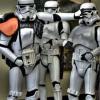
Hey Jenny, Congrats on your kit and for making progress with the build! Slow and steady is the way to go, and it sounds like you're on the right track. As a fellow shortie, I had some of the same questions about the legs. I assembled the shins first, and sized them width-wise while wearing the boots. You must wear your boots when sizing the shins, because you will be wearing the boots when out in the world- and they will fit very differently width-wise and length-wise with the boots on. You run the risk of overtrimming the shins if you don't size with boots on (the boots shift the shins up!). Bottom line: don't trim shins without boots. Okay, enough warning about that. Here are the steps I follow to size my legs: With boots on (did I mention that already?), size those shins to fit for width only. Don't worry about length yet. While wearing boots and shins, size the thighs to fit for width only. Don't worry about length yet. Size your torso to fit. It is critical that your torso fits you length wise at this stage. There should be about an inch or so of space between your girly bits and the underside of the cod piece. You may also need to trim along the edges to make the cod more narrow on the sides. No one likes inner thigh chafing. Once your torso fits you well, then put on the thighs, torso, boots, and shins (yep, in that order). Walk around (or waddle if you can't walk). You will now see (and feel!) clearly where you need to trim. Now is the time to trim those thighs to fit length-wise. I took a pencil, stood in front of a mirror, and marked along the tops of the thighs where the plastic was overlapping in the front. I trimmed those areas extremely conservatively, then tried them on again. Mark where they are still overlapping (if necessary) and repeat. The goal is to have as little black showing as possible between the thigh tops and the bottom of the torso, but still have enough room for comfortable movement. I'm the 3rd trooper from the left holding the bucket in my left hand. You can see that I tried to make as little space as possible with my thighs. If you have more of a gap, you will have better movement- but TKs have never been known for their flexibility. Also, note that my cod is narrower than the other troopers'. I ended up trimming a lot from the inside thigh areas, but not as much around the sides. I tried to keep as much material along the tops and outsides of the thighs as possible. Use this screen shot for your reference. Your goal should be to end up with something like the short trooper in the middle (and still be able to move around without armor bites). The back of your thighs and butt plate shouldn't overlap while you are standing. They will probably overlap a bit while walking. That's okay. 5. Once your thighs are trimmed so they don't overlap the cod/torso (they'll fit kind of like a puzzle piece) and you can move around, then trim your shins to fit for length. Trim the shins from the bottom only! As you trim them, they will shift down, allowing for better movement at the knee. You don't want much too black space showing at the knee (use above image for reference). You can also cut out a bit from the back of the top of the shin and bottom of the thigh to allow for your legs to bend without getting bitten by that armor. ***Note*** Depending on how much you need to trim from your shins to fit, you may end up needing to resize them width wise. Just something to be aware of! I have never been bitten by my armor and don't have issues with movement for the most part. I have to wobble a bit going up stairs, but it's not a big deal. Hope this helps!2 points
-
Finally all trimming is done and I started glueing the first coverstrips yesterday evening. I started with arm parts and found out, that glueing is better for me than trimming and you finally can see: it`s going on, that helps! And: gloves and hand guards are ordered!2 points
-
Jameson, you'll need to use the BB code to embed your photos in your threads. You'll likely get more feedback as it will make it easier for the rest of us to see your photos. Use the direct link option when sharing from imgur, or you can do what I do and just type out [ img ] (just remove the spaces), paste the link and add ".jpg" at the end and then type [ \ img ] (again, no spaces) to close the tag. Seems complicated but you'll get used to it!2 points
-
Random tasks completed tonight, limited by my magnet supply. I started off working on my sniper knee. I build a small shim that will glue to the shin cover strip. Here the knee is being glued in place. Again, using e6000 for easy future TD conversion if the urge ever hits me. Next up, the front inner strips of the thighs are glued to join the halves. I have decide that painting the bucket isn’t my strong suit. I laid down the black on the ears and vocoder. Finally I took a few side by side photos of my AM 4.5 and WTF bucket. The AM is on the left in the photos. More cover strips tomorrow! Sent from my iPhone using Tapatalk2 points
-
Just checking in. Feels like I’m moving like a herd of turtles, but I’m making progress. Seems like there’s so much more to do. - everything is trimmed, except separating the cod from the body. - biceps and forearms are sized and inner strips are glued front and back. Just need the outer cover strips and a final sanding to make them pretty - inner strips glued on the fronts of thighs and shins - ordered my boots, neck seal and most exciting, my blaster - picked up all my snaps, elastic, straps, Velcro. Going to get rivets and replacement visor tomorrow - got my under armor top/pants I’m stumped how to size the thighs and shins for length. How much mobility do you guys have? I’m assuming that you can bend your knees without too much trouble? Can you sit? Do the thighs go right into your bum? (As a reference of how short I am - My shins go a good three inches above my kneecap now.) Is there a good reference pic or thread of someone being sized for length? I definitely don’t want to take off too much or alter the curve/shape more than I have to. Is there a standard for how much space should be between all the parts? I’m loving going through the build threads. You guys give me hope that I can do this!2 points
-
Tony and Andrew, I am respectfully requesting review for Centurion approval status. I have incorporated the adjustments as mentioned on my EIB application (and as noted on the attached picture submissions) Also, I settled on the Pheonix Props blaster to be the most accurate ANH E-11 for my tastes Name: Jim Summerlin 501st TK ID: 24233 FISD Name: BDWC Garrison: Alabama 501st Member Page: https://www.501st.com/members/displaymemberdetails.php?userID=21870 EIB Application Page: https://www.whitearmor.net/forum/topic/43497-tk-24233-requesting-anh-stunt-anovos-eib-status-781/ Build Thread: https://www.whitearmor.net/forum/topic/36180-bdwcs-anh-stunt-anovos-build-wip/ Mandatory Information Armor Maker: Anovos Helmet Maker: Anovos Blaster: Phoenix Props Optional Information Height: 5'11'' Weight: 220 lbs Boots: TK boots Canvas Belt: Rob Kittell Neck Seal: Anovos Holster: Anovos Hand Plates: JustJoseph63 Gloves: Anovos black rubber Electronics: Self-made dual fan system, Aker w/TrooperTalk modulator via old iphone Full body Front (Shoulder bell strapping was adjusted to reduce gaps, forearm strapping was adjusted to maintain cover strip alignment) Full body Back (Butt plate was very carefully heat formed to correct curvatures as much as possible without inducing cracks [insert pun here]) Full Right- Arms raised Full Left- Arms raised Action Pose Ab Button Detail Left Forearm Right Forearm Sniper Plate Outside Sniper Plate Inside Thigh Ammo Box Inside Thigh Ammo Box Outside Boots Helmet Front (Hovi Tip mesh replaced with UKSWRATH coarse mesh, tips painted white, vocoder detail repainted) Helmet Left Helmet Right Helmet Back Helmet Inside and Lens color "S" trim Blaster left side Blaster right side Blaster D-ring Ammo belt outside Ammo belt inside Neckseal Thermal detonator back Interior Strapping Arm Strapping Posterior Connections Cod Connection Outside Cod Connection Inside Left Side Connections Closeup Right Side Connections Closeup (functional) Hand Plates1 point
-
Congratulations Dominic! Welcome to the Ranks1 point
-
What a great thread! Thanks for sharing, very helpful!! Sent from my LG-M470 using Tapatalk1 point
-
Congratulations trooper1 point
-
Just finished gluing right forearm and bicep. Also found some Testors paints at Hobby Lobby. Glad I didn't have to order them. Sent from my SM-G950U using Tapatalk1 point
-
Felicitations, Dominic!1 point
-
No I thought you had cut a chunk out of the face near the ear, again I think it was just a photo thing. Don't mind me, continue on lol1 point
-
Not as scary as making return edges right Cricket?1 point
-
Hey there Dan! Worked into the midnight hours with this mod, that is true. Yeah, I laid down the green stuff ‘skin’ pretty thick on the cap, thinking I needed to to get the ‘OFF->’ imprint good. Didn’t follow through with much sanding for fear of loosing the imprint so I left it mostly as is, yes, a thickness more than 1mm. Considering my mark 1 for the cap was 2mm thick aluminum before, I thought close enough. Actually, as I’m thinking about it now, the cap could stand to be sanded down more keeping watch to retain the text. Cool, will update soon! [emoji106] Sent from my iPhone using Tapatalk1 point
-
Nice recovery! For future repairs, I don't believe that you need to bite into the ABS as hard as with 60 grit sandpaper. You might be creating more work for yourself in the long run. For something this small, you might want to consider even using some acetone on a finger to smooth things out. It sounds scary, but it's not that bad. Dip a finger in acetone, then lightly smooth it over the repaired surface. Repeat as the acetone evaporates (and it will, very quickly!). The surface ends up super smooth and glossy. Try it on a piece of scrap ABS with a lump of dried ABS paste on it. You'll see what I mean!1 point
-
As promised pictures!!!! First I started with removing the two lower screws and pivoted the ears back to be in line with the trapezoid. Next I took a pencil marked what I needed to trim off, and took my exacto knife and slowly traced the line allowing me to score and snap the excess shell. A bit of ABS paste to fill the hole And finally after sanding with 60 grit and 150 grit. Still working my way up to 2000 grit wet sanding from here on but pretty pleased. Can I use the same paint white paint for the ear screws to touch up the holes a bit more or would it be better to make some ABS paint? I know I could have left it as it was and still got approved but I did not want to settle. Hope this shows that even if you mess something up anything is fixable! Just have to put a bit of elbow grease into and use the right sanding technique1 point
-
***Note: @Cricket rules***1 point
-
Christine made a great diagram for where she had to trim her armour. Not sure that you will need to trim every one of these, but if you do, keep in mind where you need to keep the return edge. Rebuilding a return edge is not for the faint of heart, but some work with a heat iron and some ABS paste can make it look like it was made that way! My computer is not playing well with a photo that is another diagram from Christine (though this may be the same one as the one above, I can't tell). Check here though: I think these may be your best resources! If you post up photos, perhaps @Cricket can chime in herself!1 point
-
Woo! Finally got around to finding it! Welp, what can I say? To my (highly) untrained eye, your armor looks good. Looks like the pictures are all there and working smoothly. If we run into any snags in the road you just come over and we’ll get you taken care of. Best of luck to you Jim! It’s good looking set of armor. Sent from my iPhone using Tapatalk1 point
-
Haha, Emmet decided to come out for ‘things magazine’ finale! Thanks for the encouraging words - first scratch build ever, fun but also really glad it’s done. Know nothing really about things guns here in Canada; no monies to purchase anyways. Glad to have y’all eagle eyes on my work; the community here really cares, thanks a bunch for the mention! Sent from my iPhone using Tapatalk1 point
-
Tips for newbies building an AP kit for the first time. Please excuse this massive post, but I tried to summarize some points about my build below. I wrote this summary up awhile ago but just got around to posting it now. This was my first build, and although I did some research before starting, I discovered a lot of other things while actually building – some of these things are just because I am new to this, and some of these things are particular to the AP kit. Most of these points are explained in detail somewhere in my build, but it is getting hard to find anything. And I’m sure for every point I mentioned below, there are two that I forgot. Again, this is the AP trimmed kit. Helmet: · The brow sat a little low and a touch crooked, so I had to raise the brow. I raised (trimmed) it about 4 or 5 mm (at the center of the front, the sides are kept in the same spot) – I could have gone a few more mm. · The ears needed some trimming and sanding to fit. The right ear was especially bad. A space between the right ear and helmet is screen accurate, but I wanted to reduce it as much as possible. After some trimming and sanding, I realized that the ear just wasn’t placed right. The bottom needed to be pushed inwards a little – but the all the holes were pre-drilled. So I expanded the holes (in the helmet parts) down a little with a soldering iron. This worked well – but when I finally put the helmet together with the brow in place, the fit wasn’t as good again. I haven’t gone back to fix this again – but it should be an easy fix – even having a third hand while I tighten the screws would help. · I hand painted everything. I tried to use the stencils from Trooperbay. They worked for the most part, but I only used the stencils for the tube stripes and the stripes in the tears and traps. I found it easy to just take a pencil and trace in the areas for the traps and tears along the return edge. Just make sure the area you marked out is big enough for the Trooperbay stencils. I mixed up the tube stripes – I put the right on the left side and vice versa. It was an easy fix – I just had to remove the front 3 stripes and redo with the proper stencil – trooperbay provides 2 of every stencil for these “oops” moments. · Cleaning up the paint. I used humbrol paint and found that it scraped off pretty easy with a toothpick. I did wipe it down with some mineral spirits first – that seemed to have weakened it a bit. It can leave a very, very faint stain, but for the most part it comes off really clean. This worked great for cleaning up edges and making things look pretty. · I installed s-trim (Centurion requirement). It was a bit of a challenge. You have to start and really work to open the rubber grove as you feed it onto the edge ABS. You have to keep pressure applied and just go a few mm at a time. I went around the whole helmet and trimmed some extra off – but left about 1 inch. I just worked the s-trim until I could get the extra one inch to fit. I’m told this helps hold the s-trim in place. I didn’t use any glue. By the way, I put it on this way (not my pic – borrowed it from Sean who is now Centurion): · Hovi-mics will not sit even. Let the OCD go. Paint the edges white · When locating the tube stripes, they should be a pencil’s width from the return edge. The left side edge is straight and this works well there. The right side is not straight and makes placing your stencil or decal a little trickier. Arms: · This was actually the first thing I worked on. Good place to start. I trimmed all my coverstrips to about 16-17mm. Mark has the trimmed kit trimmed for 20mm coverstrips on the arms, so I had to take off a little off each butt edge. The actual edge of the return edge can be hard to see in some places due to a lack of definition. I found that using the back side of the piece worked better – the lines are more defined. I just kept in mind that the front would have about an extra mm or so of width. · I used 1 inch black elastic (glued) to the shoulder bell to shoulder strap, shoulder bell around bicep (hook), and I used ¾” elastic for the forearm to bicep. I had used ¾” for most things (as per a number of threads) but switched up to 1” because it is screen accurate and works better for various reasons. The 1” shoulder bell to should strap elastic is not shown in pic below. https://uploads.tapatalk-cdn.com/20180121/b543ab19033983ac78404c1423d0949a.jpg · I originally used snaps with 1.5” elastic for the forearm to bicep attachment (as per the billhags diagram). I found this didn’t work for me. So I switched to the ¾” elastic glued directly behind the front coverstrip. Worked really well. Keeps the bicep and forearm lined up nicely. Thighs: · The right thigh gave me a lot of grief. The butt return edge was trimmed to 10mm per side, for a 20mm coverstrip. However, that 10mm got a little tight in places (less than 10mm). So I put a inner coverstrip on first to get the spacing right. Then, the whole seam is slightly curved. The best solution was to glue the lower half of the coverstrip fist. Wait to dry, then glue the upper half. I did this for both the inner and outer coverstrips. · I haven’t actually done it yet (as of time of writing this) but I will trim a bit of return edge away from behind the knee. · I ended up tapering my thighs a lot – and it didn’t seem to create any issues with gluing. · I found hot bathing the ammo pack made it really easy to install. I used the same split rivets used for the ab to kidney connection (as provided by AP). I didn’t worry about lining up the front “bump” with the coverstrip. I just made the ends look even where it is connected to the thigh – I drilled the holes 6mm from the upper return edge – that was the only real measurement I made. https://uploads.tapatalk-cdn.com/20180119/c06f287020555551e41e70006d013136.jpg Shins: · The sniper knee will not fit very well. Mine ended up crooked – as do a lot of AP kits. I tried to raise the outer piece of the shin a bit to help, but it didn’t help enough. The sniper knee plate will not fit on the shin perfectly – at least not with my skill sets. This is a good as mine got: https://uploads.tapatalk-cdn.com/20180203/159996fa67b1dc5bc212cac6c1ce63d9.jpg · I had to add a little bit of Velcro to the boot and inside of the shins to keep the shins from rotating on me. · I put inner and outer coverstrips on the front of the shins. I’m glad I did because these things take a lot of abuse. The rear coverstrip is 25mm – I used Velcro and it is working very well. Once I finished my shins, I taped them up to correct for the gaps (they won’t line up in the back). I exaggerated the correction (if I had a gap, I would tape it overlapping by an inch or so) and then took the heat gun to the shins – on low – and kept the heat gun moving. I heated up the shins so they were slightly uncomfortable to touch and then let cool. I did this a few times. It helped with getting the rear seam to line up better. Torso: · Aside from cleaning up some edges, there isn’t much I had to do for prepping these pieces. I did trim the return edge to about 5 mm. I wasn’t planning on using the canon brackets, so I wasn’t worried about using them (return edges) for anything and I heard that reducing them will help with comfort. The torso fit a little large on me so the comfort thing wasn’t an issue; however, by reducing the return edge I think I made it easier for the pieces to overlap each other. I don’t think I would trim them so much next time. · I had to hot bath the butt piece and tighten the strapping to reduce “butt flare”. The butt piece does tend to do this and it obvious on screen as well. · During the build, I lost some weight and the kidney / ab section ended up being somewhat oversized for me. This caused all sorts of issues when I tightened my belt. The pieces would overlap each other. I had to reinforce the left ab/kidney connection (the three split rivets) with glued in pieces of thick nylon webbing. I then created a tab and slot for the right side. https://uploads.tapatalk-cdn.com/20180203/671d5f8f33df3cf5589cd98eebd31285.jpg · Shoulder bridges – the ribbed abs parts that go from your chest to your back – these need to have the spaces on the bottom back filled with scrap pieces of abs and glue so they will stick better. I recommend hot bathing these so the very front part will conform to the shape of the chest and shape the back so it stays close to the back (they are free floating in the back and only held down with a little piece of ¼” white elastic. Also, the large bump at the back of the ABS shoulder bridges can be removed - I removed the large bump and one small bump as per instructions from Mark at AP. · Painting the ab buttons – I used a 7/16 circle template from an old drafting kit. I traced the circle on the button with pencil. Then hand painted – the pencil line can actually act like a dam and keep the paint in place – to a point. · Remember to trim the button plates enough. A lot of people seem to miss this from what I’ve seen in application pics. I hope mine are trimmed enough now that I think of it. Belt/holster: · Drop boxes – they are a little deep – I needed to shave off about 5mm. I aimed for a depth of 15mm. The references I found mentions anywhere from 15 to 10mm depth. · Elastics connecting drop boxes - use 1” elastic. Some threads mention ¾ inch elastic. One inch is screen accurate and will allow you to trim a little off if you need to get around a snap that might be in the way · My snaps on my ab piece ended up in the wrong spot somehow – they were shifted over to the left by a cm or two. The location of the left snap conflicted with a rivet that connects the canvas belt to the abs belt (ammo pack). I had to move the one snap on both the ab piece (male end) and the canvas belt (female end). · Removing snaps are not a big deal. If you use a drill, take your time because the snap can heat up. I drilled from the back of the male side – worked well for me. The female snap was easy, I just reached in with needle nose pliers and squished the post and the snap popped apart. · I ordered a holster from AP as well. I switched out the black straps that connect to the belt with tan coloured straps. I used ¾” 8oz leather strips. It was heavier leather than what was originally there but seemed to work just fine. AP uses Chicago screws for this so things are really easy to switch out. You do need tan holster straps for any level of approval (at least for now) – this is just a screen accuracy thing. TD: · The end caps as provided in the trimmed kit needed to be trimmed down a few mm (5mm was removed in my case). I couldn’t get these all the way on (I’m not sure if they are supposed to go all the way on). The control panel had to be trimmed down about 10mm in my case. · I had to trim the TD tube as well. I think I took off about ¾” or so. Can’t remember for sure, but I ended up with 7-3/8” total length. I believe ideal is around 7-1/4” · I also trimmed the metal just above the upper screw hole to be more screen accurate. Also had to replace the screws with slotted pan head machine screws - #6-32. The ones I found were brass, but they get painted black regardless. Strapping: · This is where you will probably have to improvise the most. · I used a single snap system with nylon base plates (and some elastic in key places for mobility). · Nylon base plates seem to work really well – they conform to the shape of the curved armor and E6000 holds them very well. · Use good quality nylon. I ordered some stuff off of Amazon – I used it until I ran out and then bought some stuff from a local fabric store. The stuff from the local place was almost twice as thick. Way better for adding rigidity to connections if needed (i.e. the spilt rivet connections on the left ab/kidney). · Setting snaps can suck. If you are not very handy and lack patience, you might want to think about getting a snap setting press. Roughly $75 on Amazon. I’ve never used one, but it has to be better than using the $15 snap setter you get at Tandy. · Choosing snaps: based on recommendations from other threads I used the nickel plated, Line 24 snaps from Tandy. Durability-wise they seem fine – but I’ve hardly used them. However, I had an issue of the armour deforming and discolouring in some locations. The worst case was where I used an ABS snap base, lots of E6000, and clamps to hold in place. This is an issue that has many builders puzzled. So, please note that the following may have contributed to the issue (none of this is proven): o E6000 may react with metal and, at the very least, create heat. o E6000 may create even more heat under greater pressure (strong clamps). o The Tandy nickel-plated snaps appear to be possibly prone to reaction with E6000. · So tips when gluing in snap bases (nylon or ABS): o Do not get E6000 on metal part of snap if possible o Do not use excessive amounts of E6000 o Apply very light pressure to hold the base in place while glue dries. You don’t need to keep the pressure applied for very long – E6000 will stiffen up pretty quick, it just takes 24 hours before it is strong enough to take any stress. o Use good quality snaps that are rated for outdoor use or professional use (marine grade – I think some people use Fasnap snaps) · Example of the reaction. https://uploads.tapatalk-cdn.com/20180117/679949ebef7613a86177d7a96ef3deec.jpg · When setting snaps – make sure they are set all the way (the post is driven down until the whole snap feels secure). · Locating the snap bases – there are a bunch of build threads that have very precise measurements for placing the snap bases. Don’t feel you have to follow any of this. Keep in mind that the closer the snap bases are to the edge – or one another – the shorter the strap and therefore the more stable that connection is going to be. So if you need more movement – you can move the snap bases away a little. I moved most of my snap bases after a few attempts at wearing the armour as it moved around too much. I originally used elastic in a few spots but replaced them for nylon. This is all dependent on how the armour fits you and what you like. I kept all my elastic connections so that I may use them during trooping for more comfort – time will tell. · For more support along some connections, I may upgrade to the two-snap connections. Single snaps can rotate and move around a bit. The double snap will not allow the play and keep things lined up. A two snap elastic system (2 or 3 inch elastic) I think would work really well. I think this would be very similar to the elastic and bracket systems used in the original costumes but you could remove the straps and you don’t have to worry about the brackets (they have to be screwed in and you need enough return edge to install them – and you will probably have to reinforce said return edge with strips of ABS). Soft Parts: · I got the flexible hand guards from AP. To attach them to the gloves (Gorilla Grip nitrile gloves) you are going to need Loctite Plastic bonding system. It contains a surface primer and superglue. Works great. · Undersuit – get compression shirt and pants – everything else just doesn’t seem to get tight enough. · Get thin cotton liners for your gloves – they get really sweaty and sticky. Fitting/dressing: · In case I didn’t mention it already – I really underestimated this part of the process. · I re-did a lot of my straps once I got the armour on. Take your time fitting pieces with the strapping. · Get someone to help – more than likely, you will not be able to get dressed by yourself. · If you are getting dressed for pictures – have a handler (someone who knows what the armor should look like fitted) there to help – that person will be making sure you look good for the pics – not you (for the most part). · If using nylon straps, pre-loosen the material by bending and twisting the nylon before measuring and cutting to length. It will loosen with use – my left ab to kidney connection really loosened up after a few fittings. · I did use a little foam attached with Velcro in a few places to keep pieces more stable (biceps for example). I would rather keep things a touch loose – incase I gain a little weight. · I put Velcro on the front of the boots and inside the shins to keep them from rotating. General building stuff: · Lexan scissors work like a charm for trimming most things. I got a set that included a straight pair and curved pair of scissors as well as a tool for boring out holes (I bought this on sale: Duratrax Body Scissors and Reamer Set, 3 piece). This worked very well for countersinking the edges of drilled holes for snap installation. If you don’t get the set, at least buy the curved scissors. Score and snap works best for the cover strips. · You get a generous amount of cover strip material. If you don’t make many mistakes you should have plenty to do all cover strips – inside and out. · Note that there is a good and bad side to the cover strips. One side is shiny and white, and the other side is less shiny and less white. Can be hard to see under non-ideal lighting conditions. · The cover strips are rough cut – so you will need to make sure the edge is square before trimming. Also, to make the most of each piece, you could square the piece on both sides – measure the width, and figure out what combination of strip widths you can cut. If the width is 55mm, then you might want to cut two 20mm strips (for legs) and one 15 mm strip for arms (or whatever widths you have decided on). My laziness overrode my OCD on this and I didn’t do it but it would have provided even more usable material (if I needed it – which I didn’t – so, nevermind). · Rough sand any areas that you are planning on gluing. Like back of cover strips, for example. I used a 100 grit paper and it worked well. Use E6000. · Use enough E6000 on cover strips so that the E6000 oozes out along the edges. This is a good thing. E6000 is pretty easy to clean up after it dries. · Humbrol paint is a pain in the donkey. Especially the French Blue – it needs a lot of stirring – at least mine did. Maybe it was an old tin. · I cleaned my armour with mineral spirits in the case of paint smears or drips. I also have Novus cleaner and polish that seems to work really well.1 point
-
I've heard of some troopers adding white felt around the inside of the ankle to help protect the boots.1 point
-
My apologies, it's been long since I've updated my build topic. However, I have not been completely idle about my build, so here are a few updates. First, it seems like it took me some time to master tha art of "snaps setting" - haha - but I think I got it pretty much now! I am so happy and would like to thank everybody who sent me some tips - it's all been really useful. So once I got how to do it, I made a lot of snap bases. Here is some detail about what/how I did... I'm using the "double snap" method, so I used 2" wide black nylon strapping, and I cut some 1.5" long pieces to make my snap bases 2" x 1.5" approximately : Then I measured to center both snaps on my bases, and precisely marked where I'd need to punch a hole... I used a soldering iron to burn the edges and finish the holes clean. Ready for snaps eyelets. After that, I hammered the snaps eyelets into place in the nylon bases and everything went really nice and smooth. I used the tool that Christine mentioned and it went way better than simply using the Tandy tools. Perhaps the Tandy Tools are not that good even if they are the "pros" in terms of snaps. So I had no problems hammering these snaps on the bases, and I tested them all and they worked really well. I'm happy to have finally got how to do that right; I wasted so many snaps trying to get it haha! Anyways, I've done many bases - about as many as I need to glue on the major body parts (chest, ab, back, kidney, ...) to make them hold together properly so that I can measure the length needed for the connecting straps that will have the snap studs attached to them... Will be way better than the fit tests I made already using just tape. I've also worked on some other parts of the armour as well - espacially the thighs, for which I'll post some progress pictures right after this post.1 point
-
This afternoon I decided I needed to spend some time breaking in my TK boots. I also sanded and shaped the shin pieces and cut more cover strips. I completely removed the return edge on the bottom of the shin pieces. I'd like the shin to scrape the boots as little as possible. Sent from my SM-G950U using Tapatalk1 point
-
Hey Jesse, great to see you and "Emmet the master builder" are back again. Awesome update, man. You went the extra mile on the magazine. While reading through your text, I wondered about the gun laws in your country. Because over here I can buy an original magazine for just 25 Euros and cut it. You must have spent hours into this crazy mod! Wow. Yes, I was about mentioning the same but Mark was faster.1 point
-
Dude!!! That's some serious work you've put into the clip. It looks great!! One question: and I may be "nit-picking" but... is the LED maybe sitting a little "tall"? Mark1 point
-
When in doubt refer to reference photos .1 point
-
Hey guys, I'm really loving all the paint comments. It's great to get a "collective" opinion from people who have experience. Ultimately, it's up to you (the builder) as to how much work you are willing to put in what what paints you have available. I ran a few more "tests" and managed to get some "wrinkle" results with the VHT Wrinkle Plus. Maybe I should have read the directions first. So, it appears as though some paints work differently. The Rust-oleum and Tremclad seem to kind of "spit" out the paint for a textured surface (not a fine mist) and then rely on different paint densities and reflections to give an apparent hammered effect. Doing several light coats (with a bit of dry time in between) gives more "spit" and as a result, more texture. The VHT is different. It seems to rely on a "constriction" effect as the paint dries to form ridges. It goes on smooth and wrinkles over time. I got fairly major wrinkle results following the manufacturers directions. Spray a heavy coat, wait 5 minutes, spray a heavy coat at a different angle, wait 5 minutes, spray a third heavy coat at another different angle, then wait two hours. After 2 hours you should see a wrinkle effect. If you don't, you need heavier coats. Then you have to wait 48 hours for the paint to completely dry. Here's what I saw: Now, I think I know why they call this a Wrinkle effect, not hammered. I would describe hammered as little pits or dents or bumps in the paint.....either as a texture or as an effect. This wrinkle paint I would describe as tiny little lines all over the paint. Almost as if someone took an X-Acto knife and put billions of tiny cuts in the paint, all perfectly straight but going different directions and probably 1/2 mm in length. It's an interesting effect, but maybe too much? I wonder what lighter coats would look like? From what I'm learning from hammered paints, probably a lot of this wrinkle texture is coming from the hard reflections from the gloss paint. Hitting it with matte black or a matte clear coat should really reduce the wrinkle appearance... It kind of hard to capture in a photograph. It looks ok. Kind of different. You could probably get a nice texture with more experience. But here's my concern, if the VHT Wrinkle Plus needs 2 or 3 heavy coats to wrinkle, that will probably decimate any detail in the resin. I don't think I want to take that chance. This might be the type of thing you apply in a few areas to look like rough metal and probably not something you want to spray over the entire barrel. I think I'll stick to the hammered paint and just end up with a less "textured" finish. Mark1 point
-
Don't worry With an appropiate investigation here in the forum and the most important thing, patience, you will reach Centurion without pain. And it's always worth to go for it.1 point
-
ugh!!! I love the look of the shiny new armor. Great work so far on your build. In a way, I now envy you1 point
-
Looking good! Should be an easy approval. The only suggestion (and this is more for aesthetics, not for approval reasons) I have is to even out the gaps in your arms. Your wrist gap is much bigger than your elbow gap. You could drop your forearm piece a centimeter or two to even them out. Now go get that TK number!1 point
-
Just waiting now to see if ross at rwa produces larger kidney sections to close the gap and hopefully when it comes to it . Get higher clearence [emoji5] Sent from my GT-I9505 using Tapatalk1 point
-
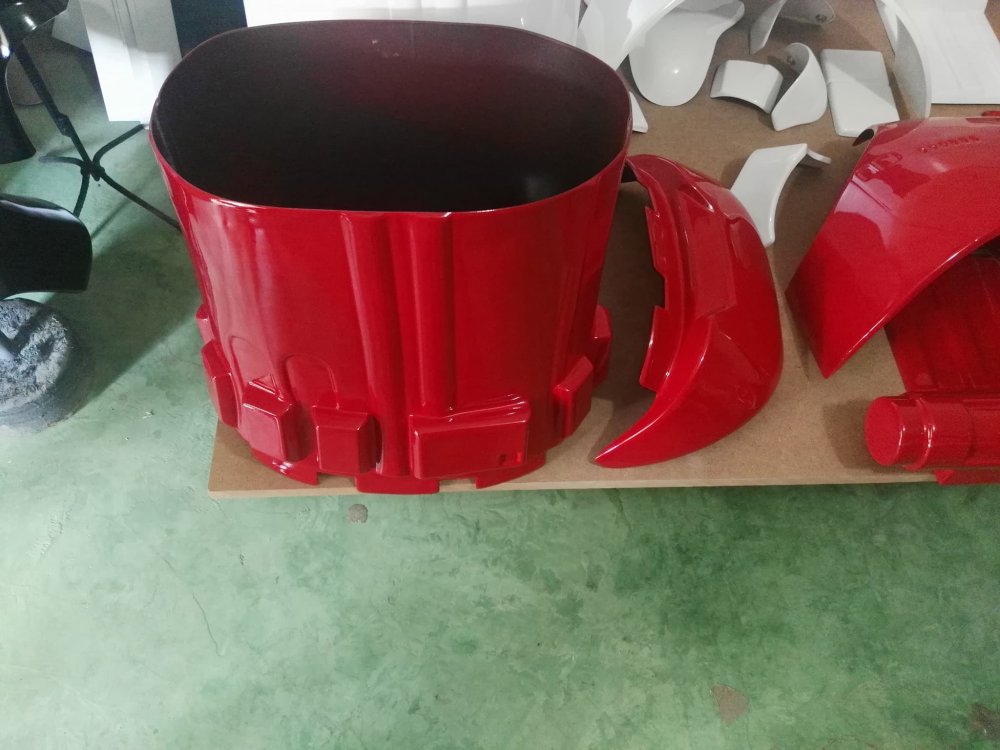
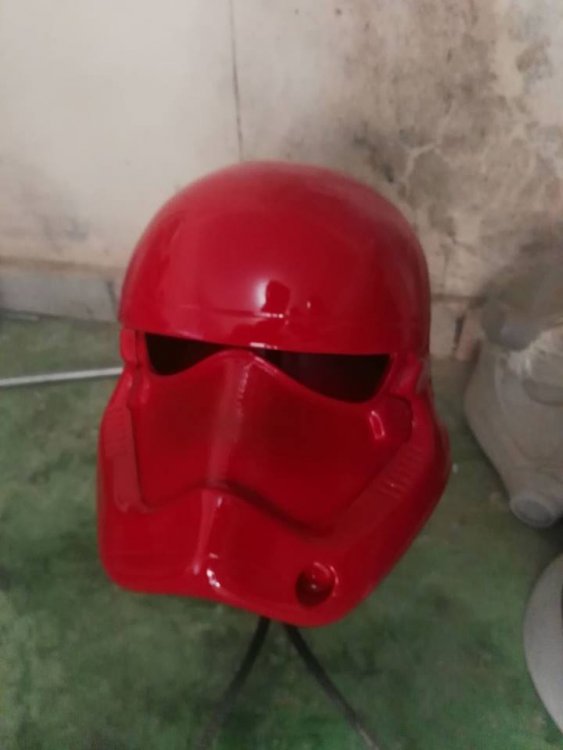
Well here's an update on mine, slowly but surely. Ordered the Phasma boot armor from phprops, so I can go either way with the boots. I'll have the cloak done once the armor is finished.
 1 point
 -
Looks like the one to me! My setting tool looks just like that one. Although the kit over on Amazon is a bit cheaper. At least on my end it is just $6.97 shipped Prime. http://a.co/99tJ8kU1 point
-
I’ve seen these setting tools in other people’s build thread and never knew where they came from. Thanks. I found the Tandy setting tool difficult at best. Sent from my iPhone using Tapatalk1 point
-
The overlap was just for sizing and the photo. Everything I've done so far has been butt-jointed (hoping for Centurion down the road). Thanks for the feedback. Sent from my iPhone using Tapatalk1 point
-
Yes, you'll need to adjust the ridge size in accordance with your cover strip size. Definitely use the butt-join method vice the overlap method. If you need to make the thighs smaller, cut material out of the back.1 point
-
Ah look my wife knows exactly what to get me for my birthday!1 point
-
Thank you both! It was a bit scary at first but really not hard at all. Here is the butt plate before sanding with ABS paste and now after sanding I don't think I need to smooth out too much more. What are your thoughts?1 point
-
Today I had time to create my neckseal! After trying some techniques I`ve found the best way to get a really nice shape. I`ve put a fabric lining of cotton fleece in it, which gives softness and volume . To get a good looking shape I used a 4mm rope. Here you can see my result:1 point
-
Good Idea. You pick up great tips and meet great people at armor parties!1 point