Leaderboard

Popular Content
Showing content with the highest reputation on 09/14/2017 in all areas
-
Finishing up some front sight assemblies,,, sight block and the little blade sight piece4 points
-
sterling Stock spring guild3 points
-
Hi all, Managed to squeeze in an hour last night. Carried on with the grip by removing the fake screw underneath and replacing with a real one. A little annoying I don't have a pillar drill - the hole for the thread to settle into isn't perfectly straight/perpendicular, but I think I've just about got away with it. :-) Also started removing the excess resin from the end cap. Sent from my iPhone using Tapatalk3 points
-
Oaaahhhh This is freakin' awesome, Chris. Never expected you to go THAT deep into this detail.2 points
-
Looks like I'm not done with this project. When I saw that Robert (swpropman) had made replicas of the magazine follower, I immediately placed an order with him for a set. To my surprise, it arrived along with the bottom plate and sliding plate in separate pieces! Here's a comparison between the original one-piece and the new two-piece plates. The follower replica is one solid piece, so I am going to modify it with working rollers. Test fit in the magazine. Left photo is Robert's real follower and right photo is the plastic replica. This morning I separated the roller portion from the holder. Unofrtunately that was all I had time for before rushing off to work. To be continued...2 points
-
This picture says it all! My SBB in all it's glory! Wooh, it was a good month of waiting which isn't so bad at all considering it came from the UK. For my E-11 Blaster, I decided to go with a Doopydoos Full Resin Kit. All parts were delivered but the folding stock - wishbone had a piece broken off. This is my first blaster build. First time also working with Resin. I am going for good level of screen accuracy, battle worn and as realistic as possible, especially as it pertains to the SMG part. I will be making a ANH version of the E-11. To bring the blaster to the next level, I am complimenting the doopydoos kit with T-jay's Completion set, and Chris's 3D printed parts. Although originally looking to get Steve's magazine replica some time in the future as well, it will be a toss between it and Robert's magazine, as the latter is hollow and I may need room to put electronics. One huge addition I am absolutely to-the-moon-and-back about is installing Paul's fully wired and ready to install BlastFX - electronics that will bring the E-11 Blaster alive with lights and sound. This latter addition will be a dream come true; order made to arrive late October 2017. As for instructions, I am relying heavily on the E-11 Blaster Reference Manual. Thank you thank you for all the authors involved in this valuable document - gives us newbies a solid step forward. My timeline for completing the blaster is likely a year or so into the future. I am just out to revel at every detail, enjoying small advances every day. With E-6000 as my CA of choice and allowing for green stuff to fix mistakes with that cure time of also, 24 hours, I need all the time in the world anyways. Also, I'm not going on any particular order. Generally speaking, I will be putting the SMG portion together first then, move to the E-11 parts following, but not in every case necessarily. Also, I will seemingly leave component parts 'incomplete' and jump to another component part. So in short, my build will not be done in orderly fashion. Well, without any further due, let's begin!!! After a nice wash to get rid of fine resin dust and left over release agent chemicals, I proceeded to sand down the two ends of the broken part to get ready for applying the reinforced epoxy. I then placed the entire folding stock / wishbone piece on my vise. I placed Popsicle sticks to fill the void between two forks of the wishbone and held them together with tape. After having the epoxy settle while the piece was on an angle sitting on my vise, I felt the epoxy was starting to harden, although really, it was just a short while, so I positioned the piece vertically, so to use gravity for better surface area contact between the resin parts and the epoxy. After cure, all is well! The forks sit evenly between themselves - Yes! Just need a little sanding down of the left over epoxy around the seams which I'll do later when I tackle that piece. Here, I drill all holes in the Receiver tube. Before getting into details, want to emphasize how fine the resin gets when you're killing it. Highly recommend, as it was highly recommended to me, to use a proper respirator and safety glasses. Nothing beats safety and ensuring for good health! So I began by measuring out the existing holes made by Doopydoos using my precision measuring tool and came out with 7 / 16 " and was delighted to see a matching step on my step drill - bingo! I then used my kids crayola crayon to mark the center of the to-be-cut holes and placed the receiver tube on my vise trying to keep it as horizontal as possible, trying to eliminate any tipping and rolling etc. As for the drilling, I tried to keep it as vertical as possible and let the drill do it's work. It took a while, especially when you hit the inner metal tube. I was afraid to go too far so, as you can see, I didn't go all the way to the 7 / 16 " mark, afraid I would over-rotate and make a large gaping hole! It was difficult to see how far I drilled too with all that swiggly resin coming about from the drill process. I will need to go back with some fine precision to get it just right. Better to proceed with caution right?, then have nothing to work with and sorrow. I will need also to finish drilling the rest of the holes, which, hopefully, I will be brave enough to commit to the 7 / 16 " mark more firmly. Here is finer detail showing the work more clearly. I am happy to have made it this far though as I try to be as systematic as possible, wanting to have a clean build with as few mishaps as possible. I proceed with finishing off drilling the remaining holes of the receiver tube. After marking the center of the holes, I created pilot holes and proceeded with using the step drill bit this time around. This just gave the step drill more grab and helped me have my holes more aligned. If you noticed, my first set of drilled holes had one that was pretty off! Here's the piece after drilling. As you can see, I still have the folding stock notch that still needs to be cut out. Oh and yeah, I went a little trigger happy with my drill and tackled the holes on the underbelly of my wishbone. I also will need to do some modeling with 'green stuff' to fill out the handle piece I mangled. This complicates things for this piece, especially about the extension tube which I destroyed, but I will get around to addressing these later. I picked up a 6 in. Round Bastard File (the weirdest of names) to help sand down the uneven inner parts of the drilled holes. While sanding, I noticed that Doopydoos leaves allot of resin where the T-tracks meet / grab onto the receiver tube. The holes on either end of the tracks are filled with excess resin which obscures and takes away the kind of detail I want. To open up the T-track grab holes, I first drilled... ... and then used, what's called a Riffler file to get at shaping out the hole. I learn something new everyday. It says they are made for woodworking, but it is working fine so far. They're pretty tiny tools that come in many sculpting forms. The one I chose is curved on the outside and cornered on the inside. I am hoping the curvature will help me shape the hole and the cornered part of the file to give me the angle I want for shaping the T-track part. Here's the cornered part of the Riffler file tool I just mentioned. Here's the tool getting at the T-track part... ...and now the hole curvature part. Here's the T-track grab hole the way I want it. I think the cut out / file will get cleaner as I work the other holes. The vent hole notch is now cut out and I've managed to patch-up a vent hole that was quite off. Hollowing out the folding stock was quite a bit of work as you will see. Receiver Vent Hole Notch Precision measured the notch to be 3/16" and applied a 1/8" router bit to my Dremel 3000 and put it to task. Followed up by using a square file to get it clean. Redo of Vent Hole Used a 7/16" thread-cutting tap to carve out a portion of the vent hole. Then proceeded to fill entire hole with green stuff. I let the green stuff harden over 10-12 hours to be safe. Then I drilled through once again and followed through with a sanding file. Now, the vent hole is the right size and in the right place, mostly - it's now to my liking. Hollow out Folding Stock Used 1/4" 60 Grit Sanding Band (Dremel 430) at medium then high speeds, ranging from 30,000 to 35,000 RPMs. Before I knew it, resin dust was spewing into the air. SO glad I have a good quality respirator because there was a lot of resin dust by the end of the task. My little nylon brush came in really handy to brush away dust between sanding sessions. I managed to hollow it out in about 1/2 hour. I will need to go back to lightly sand to get it just right. Finally set-up my workshop - here's my set-up for resin work for use of my dremel and for manual handheld sanding. Progress on front sight. I precision measured a dimension on the block and compared that measurement with the real sterling dimension from the E-11 Blaster Reference guide. They don't match up. I gather, generally speaking, doopydoos somehow reduced the scale of the thing? Think will likely need to eye-ball it to get it to proper shape. I came away quite literally, 'short' on trying to make due with my Doopydoos front sight block. Having filed it to shape it,it came out really small! Don't think any pin is going to fit inside let alone a grub screw! Order for Chris's 3D printed part happened real soon after this! In this test-fit pic, the block does look reasonably well but definitely, still on the small side. I did do good on texturing the appropriate parts of my front sight though, like that of the original sterling - green stuff applied and patterned. Green stuff applied Knurling pattern source Pattern applied Pattern applied to back I then removed the strip on the bolt and also made that part of the receiver tube more pronounced. Doopy's resin blobs for screws were also removed. Strip removed Edge enhanced Resin blobs for screws Left blob removed Right blob removed Proceeded to hollow out the outer edges of the bolt, I've gone and recreated the plunger and extractor. I'm happy with it mostly, although still lacking in size and detail but I like it enough to move on. When my completion kit arrives, I have to follow through with putting in the strip that diagonally runs across it. As I don't have a letter and number stamp set to put in the serial number thingy on the bolt, that will be a much later addition. Plunger & Extractor Did more detail on the folding stock. Having hollowed where the rod sits a while back, today, spent the time to add realism to the piece. Carved in and around individual pieces that make up the folding stock to add realism by making it look more like movable parts. There's a ton of 'green stuff' where I was too generous using the Dremel. Still need to follow-up to sand those parts down. Folding Stock I was careful not to hollow out too much of the opening so to reveal the latch inside. Proceeded to work on magazine power cylinders. I just took out the central capacitors with my dremel. Original power cylinder Close up of central capacitors Central capacitors removed I proceeded to tackle a rather significant component of the E-11 Blaster - the m38 scope. I've managed to use spade bits to hollow it out and made some front and end cuts. I've purchased a monocular and will place it in the inside. With the scope being hollowed, I'm hoping the light coming through to the inside will make the monocular functional. Lenses will be placed on either end of the scope as well - with it's concave shape, this will help with drawing light in. A third glass-like disc will also be placed near the large lens end of the scope to reveal graticulars, cross-hair thingys, you know, for aiming at those rebel scum! Original m38 scope - front assembly end Original m38 scope - large lens end I uses spade bits to get the job done. 1" (25mm) bit was used to begin hollowing at the large lens end. 3/8" (10mm) bit was used to begin hollowing at the front assembly end. I tried to be as tactful as I could to progressively move to smaller bits as I proceeded deeper into the scope from the large lens end as you need to take into consideration the narrower contours as you get further in. If you do make a mistake as I did, not tapering in far enough, it's nothing green stuff can't fix. Hacksawing to remove large lens housing Front assembly end - lens housing removed large lens end - lens housing removed Reassembled scope - front assembly view Reassembled scope - large lens view I was eager to get started as ordered items from Shapeways arrived in the mail recently. I now have a true replica of the sight block and pin. With this piece in my possession, I proceeded cautiously to carve out a 'dove tail' channel that will hold the sight block. Having cut-guides put in place, I proceeded to cut out the channel using a hacksaw blade, and using a square and mostly a triangle file to get it to shape. I dare not use a dremel or I would have messed this up really bad. Applying intricate filing and allot of patience paid off. Although the block sits a little loose on the channel than desired, it's nothing green stuff can't fix. I'm overall quite happy with the results. Sight block position template Outline of template Template removed Precision measure for depth of dove tail channel Hack sawing is the first go Square file to retain hard edges at 90 degrees Masked hard edges so I don't widden top edge of dove channel Finished dove tail channel Top view of finished dove tail channel Side view of finished dove tail channel Sight block with pin, test fit on finished dove tail channel Side view of front sight installed Thanks for reading! Any and all comments welcomed.1 point
-
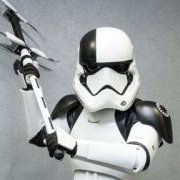
Hi! I'm Kit, TK44840 of the Philippine Garrison. Just wanna share photos of my First Order Judicial (FOJ? FOE?) / Executioner Stormtrooper (ETK? TKE? TE?) from the recently concluded Asia Pop ComiCon here in the Philippines...and Force Friday 2 here in Manila, Philippines. It's a Jimmiroquai TLJ FOTK set. Here are the parts we identified that changed: -FOTK bucket TLJ version -black shoulder bells with First Order emblem -back with black yoke -thermal det with solid black extrusion -overlap in inner biceps I say that the work Jim has put into the new TLJ FOTK is pretty spot on. Hoping this would help others who are building this particular character.1 point
-
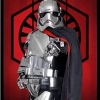
Bah I just posted about this, I am also considering doing Cardinal. Everything points to him being basically just a red stormtrooper with a captain's cloak. And the cloak trim looks a bit more maroon then red. I talked to my GML and he basically said there wasn't enough info. But honestly the only thing you cannot see are his boots. But everything else points to him being a standard FO TK, just red. I am considering getting FO TK armor and just going red, and get the cloak. If it gets approved cool, if not it's still an awesome looking costume. Hopefully there will be a comic or action figure or movie flashback or something more of him. He doesn't die in the book (SPOILERS) so it's possible we'll see more of him.1 point
-
Being a Phasma, and a Captain in this Universe, hes a StormTrooper. And the book Clearly states that. As Phasma is. He is in all aspects drawn or portrayed as a FOTK in armor. And a Captain as Phasma is. He sounds perfectly mean and cruel, and looks amazing! I'm excited!!! Thank you for reaching out to me to create your seal harness and FO gaskets for you. And this cape!!!!! I'm utterly excited to also create a cape that mirrors my Captain Phasma! His looks a bit different, but very doable! If you are doing this Bad Captain, I SO want to sew his cape for you! Having sewn and researched extensively my lady's cape, I'm excited to create his for you! I'd like a bit more reference, and hopefully visuals will be forthcoming, but if this is a go, I'm happy to work with you on this Tee-Bowls. Sent from my STV100-3 using Tapatalk1 point
-
Abyss = room for electronics, maybe not in this case, for your next build [emoji38]!1 point
-
Hi Randy and welcome to the FISD. You should go into the new member area and start a thread to introduce yourself. Anyway, check out this link: https://www.whitearmor.net/forum/topic/11538-the-various-types-of-armor-and-where-to-find-them/ All of the recommended sellers are "realistic." Now keep in mind that there are a bunch of us who bought stormtrooper armor and thought they would build it and display it. I was one of those people who wanted to build a screen accurate stormtrooper and display it in my finished basement. But while I was doing the building I decided it was way too cool to just sit on a mannequin. So I joined the 501st www.501st.com and my local garrison and it was one of the best decisions I have ever made in my life. I hope you consider it in the end. Have fun.1 point
-
Another outing this time "Science Alive" an event held in Adelaide and 3 country areas across South Australia to encourage Science. This one was in Whyalla a small city about 80 Km from me. R2D2 and K9 came as well and we met up with a local Dalek builder. "I've told you, you're not the droid I'm looking for!" or "Don't try and blame K9 for all those bodies"1 point
-
And...crap, been a long week. Karate, curriculum night for 2 kids on two nights, working late, cub scouts - all my free time is out the window. But, it's still in my queue. Patience, please.1 point
-
Interesting to see the inner components of the magazine - getting details tight for SMG part, your blaster is getting even more real....anticipating next update1 point
-
Time for a quick update before bed. I have been working on this costume for the past few weeks, just needed to concentrate on building rather than posting. At this time it's nearly done but I only have a little time tonight for an update. Last time I had finished the TD construction. Now it's time to finish it up. I started off by using white Plasti-dip to seal the foam. This is needed otherwise the foam will soak up the paint. So I put a couple coats of this rubbery coating on. The first coat goes on pretty heavy and the second coat is for touching up any spots you missed the first time. Before painting, place the can in warm water for about 10 minutes to help the spray go on smoother. Once it was coated, I then painted it with Krylon gloss white spray paint for plastic. I put at least 3 coats on. Then I brushed on the gray tube color. From previous TK research this color is Gunship Gray. I had a can laying around from my TK build. Here's the painted TD, just needs some clips. For the clips I purchased aluminum strips from the local hardware store. The width seemed about right so they just needed to be cut to length and bent. For cutting I bought tin snips rated to cut 20 gauge metal. Then I bent the shape over in my vice. I wasn't sure if contact cement would work on a painted surface so I attached these to the TD with the hot glue gun. For the gloves I used the same technique from my TK to attach the hand guards. I stuffed them with rags to get a rounded shape the used E6000 to glue down the guards, taping them with painters tape to hold them in place until dry. That's all for tonight. Take care guys and girls. Troop On!1 point
-
wow!!!! i have to buy myself those followers, this is going to be a great mod!1 point
-
Excellent thank you1 point
-
Congrats, Matt... now onto Centurion, Trooper! If you would like your EI certificate, here is the link: https://www.whitearmor.net/forum/topic/40769-request-your-eib-certificate-here/1 point
-
Hi Tara, Andrew or myself will be with you shortly. While you wait could you post the following photos please. Waist belt complete front and back Thigh ammo belt to thigh armor inner connections Another, clearer photo showing the helmet "S" seal Armor interior - Chest & Ab sections Ab button details Thank you1 point
-
There's also an aspect of an "expert eye". First time you don't look and so you don't see anything wrong. Now once someone has a certain amount of knowledge they look again, and look harder, and see all the wrong stuff like swapped shins, missing stripes, broken armour, missing biceps, weird holsters and so on.1 point
-
In-coming....another WIP update: Inner bolt clearing strip I went and studied the correct location of the clearing strip on the inner bold with FISD E-11 Blaster Reference as my primary source. I then etched in the location using a pencil and measured out the width of the strip along with the approximate length of the strip. The width measured 6mm and the length measured approximately 50mm. I then followed these dimensions and cut to shape on a 1mm thick plastic piece using my lexan scissors. I then proceeded to go at trimming the ends of the cut clearing strip. It was a bit tricky trying to gauge where to cut, especially when putting it against the curved inner bolt. After eye-balling it the best I could, the ends were cut and then I proceeded to shaping it. I heated the strip using my heat gun. At high setting, the 1mm thick plastic became pretty maleable, pretty quickly so I pushed it against the inner bolt over the templated part of it. I used the middle portion of my long nose pliers to push down on the strip. After some trial and error, I did manage to twist the strip to form along that part of the inner bolt. Here, I go about gluing the clearing strip to the inner bolt. I created a glue applicator using a piece of armature wire and used a piece of this kind of wire to rough up the glue-side of the strip to prepare it for adhesion. The CA of choice is E-6000. I figured using it would give me more know-how when I do use it to build my TK armor in the future. With the clearing strip glued in place, I used a clamp to keep things together for the curing process. Also, I felt I needed to use the popsicle stick method to fill the void between the outer receiver tube and the top of the clearing strip. Here is the clearing strip as it should be after gluing. I will check in 24 hours how it dried. Thank you once again for reading, cheers!! Jesse1 point
-
Hey guys just updating you. I haven't posted in a while because we had to evacuate Miami and go north due to Hurricane Irma. I'm sure many of you had to do the same. Fortunately my home wasn't flooded (and even if it was, my TK build and supplies were stored securely up high!), but my thoughts and prayers are with all those that have been effected. My prayers are also over the fire and rescue and law enforcement teams. Please stay safe out there guys.1 point
-
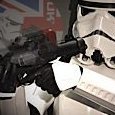
sharing photos from Force Friday 2 here in Manila:1 point
-
Try Roy. He sells t tracks for sabers and blasters. Marv (here on the fisd) also offers them still, I think. http://wannawanga.com/shop/1 point
-
Awesome. I can't wait to have this in hand.1 point
-
E11 sterling stock assemblies will be ready soon..... one more part in the works1 point
-
Awesome! Digging out the tiny spaces where the t-tracks enter the holes looks great, super start , looking forward to the rest of your build.1 point
-
Sometimes even bad things can cause good things... Wishing you a lot of fun with this fine blaster.1 point
-
For the past two days I've been landscaping the front and back yard. But I did have some time to work on the armor and get the shins mostly built. I just need to test fit the backs when my son gets home. Before he left, I took measurements of his shins and used these when making my templates. To get the shape right, I tried the pattern-making technique using duct tape. I covered the piece in foil, making it as form fitting as possible. Then carefully covered with duct tape trying to make it flat and form fitting around the piece. Once it was covered I made a slice in an inconspicuous spot, along the edge of the front cover strip. Then I flattened out the duct-tape copy and cut it into it component parts. I took one side and the center piece to make my template. I knew based on my sons measurements that his shin was 8" tall where mine was 16". So I'd have to reduce the template by half...at least in height. So I took a picture with a ruler in the image then brought it into Photoshop where I adjusted the image size until it was scaled to real-world dimensions. Then I reduced it by half and printed it out for my template. Here are the piece cut from 6mm foam. A couple things to note here. I wanted the shin to have the same flat face the real TK ones do. So when I cut the center piece and each adjoin side piece, I cut the edges at a 45 degree angle so they would meet up nicely. The image below is actually my second attempt. The first on followed the curving line at the back of the shin template, the ball of the calf area but when I did a test fit, it was going to be too complicated to assembly and too much heat bending a weird shape. So I simplified it and made the back cut straight. I did an initial heat bend over a rolling pin to get the basic curve. Then I did some more extreme bending to get the radius tighter. Basically held it in my hand while heating then squeezed it into shape. Here you see how the 45 degree cuts make the pieces easier to assembly with clean lines. Here's the first piece after gluing. I was in a bit of a rush when making these. I assembled both shins before realizing I forgot to check the radius at the ankle and at the knee against the measurements I took of my son. Turns out I was about 1" short. Doh! So, easy fix here, don't panic as you can simply glue on a filler piece. To get some extra room I cut and glued in a 1.5" filler piece on the back of each shin. Again, cutting 45 degree angles for a nice closure. Once I can fit these on his calve, I'll know if anything needs to be trimmed off this filler piece. For now, it's ok. I'll probably make the closures using Velcro. No magnetic closures this time! The photo below will be the left shin. That way the joint will be tucked inwards and less visible. Now it's time to trim out this piece. For reference, here's my shin. I started with the raised top banding. For this I used 4mm foam cut into strips about 15mm wide. To do this, I simply placed the strips over the shin and marked where they should be cut and at what angle. Bevel the connections. I made some reference dots so I would remember which pieces connected during gluing. Here I'm test fitting a piece. Here they are after gluing. Then I added cover strips from 2mm foam. Purely decorative, not functional. Next came the sniper plate. I sketched out a template for the hexagonal piece. The side pieces took some trial-and-error to get right. The main issue was getting the correct angle between the hexagonal piece and the side pieces where the touch. As you can see, the angles on the side pieces are not the same as the angle on the center piece. Once I had it right, I cut new pieces at the correct angle and length. Bevel those joints. After gluing the sniper plate together then gluing it down to the shin, I then made some trim pieces out of 2mm foam. I also made the raised bumps on the bottom out of 6mm scraps I had laying around. That's it for tonight. Thanks for tuning in and I hope this is useful for anyone making a foam costume. I think the belt will be the next piece I make, should have an update in a couple days. Good night!1 point
-
And it's finished! Bear in mind there are a few details that are NOT screen accurate.1 point
-
Made it home from the hardware store with pipes of various sizes to use as cookie cutters to make circle shapes. I used this technique to make the ab buttons. These are from 4mm foam and I used the Omni-stick to glue them down. Using the contact cement with a brush is too hard on these little pieces. They just get stuck to the brush. Next piece to make is the kidney plate. This is really straightforward. Since I had the ab and chest and back positioned, I knew the bottom of the kidney needed to align with the bottom of the ab and the top of the kidney needed to align with the back plate above. I sketched it out marking the key points including the raised panel and the kidney notches. Cut this out of 6mm foam. The raised detail in the center is from 4mm foam. I decided to try a trick I learned from watching Evil Ted videos. Put the contact cement in a squeeze bottle. This makes it much easier to control the placement and you don't have to leave the lid off the can thus minimizing vapors. We'll see in the morning....hopefully the cap doesn't glue itself to the bottle. After some bending with the heat gun on 450 F, here are what the pieces look like. Next I made some 1" wide Velcro straps using the same technique mentioned above. Hot glue the Velcro to the elastic strap, then hot glue the straps to the foam. Here's how the torso is coming along. Pretty well I think. I just need to make the final adjustments to the ab & kidney ends once my son returns and I can try this on him. Next thing to tackle will be shins...and we all know how much fun those are to assemble. Let's see how hard they are to build out of foam!1 point
-
Hi Troopers, The wife and kids are off on a vacation up to Quebec City to visit relatives. I had couldn't get away due to too much going on at work. So while they're gone and I have the house to myself and some free time I want to get some more built on this costume. It's time for 60 second abs! Let me start off my showing some no tools I got. When I first stared off I was going thru lots of Xacto and box cutter blades due to the foam dulling them rapidly. So I got a couple sharpeners and they are great. They make the blades razor sharp again and I've been using the same blades for several days now. The flat and orange one is one I picked up at HD and it's a diamond sharpening tool. Works great on the Xacto. I saw the other one recommended in an Evil Ted video and it's really great too, especially for the box cutter. Both were in the $12 range. I also picked up some masking paper at HD in their paint section. This roll has been great for laying out patterns. Last night I took some measurements of my son. Waist circumference, height, inseam, position of the chest piece relative to his waist, etc. I then used these measurements to lay out a shape for what would become the ab. In this image the solid line is the ab piece and the dashed line is the chest piece laid over top so you can see how they will overlap. I made then overlap as that's how the real ones are but also so he can grow a bit and I won't have to remake this section. I cut out the left half of the pattern and used it to create the foam piece. I used 6mm foam like the other main pieces. Than I re-traced the chest profile onto the ab. This way I could sketch the detail panels for the ab in relation to the chest piece above. I started off with the main raised panel on the center of the ab piece. I sketched this out in pencil then made a cleaner drawing on the actual 4mm foam sheet that I'd cut the piece from. I repeated the process using 4mm sheets for all the other details, using contact cement to glue them down. I'll cut out the buttons tomorrow but I have to hit up the local hardware store for some metal pipe which I'll use to push thru the foam, cutting out the circles like a cookie cutter. this piece took about 3 hours to make. I just realized I forgot to make the raised piece at the bottom. Guess I'll add that tomorrow.1 point
-
Where I left off last, I had cut out some patterns for the front and back chest pieces. I had to wait a bit for delivery of my foam rolls. I bought 4mm, 6mm, and 10mm rolls as wells as some 12mm floor mats. I laid the patterns down, and traced them out on 6mm foam. To be safe, I gave myself some extra material at the shoulder bridges and at the sides of the chest. I then heat-formed the chest to give it some curve. To make the raised chest detail, I used the thicker 12mm floor mat material. I wanted this to taper and blend into the chest the way my TK does. to do this I'd need a piece that was thick enough for met to cut to a taper. To transfer the pattern to the foam I did a connect-the-dot method. You could also press the pencil into the foam as it's soft enough to make a line impression. Once I had the shape cut out I took my flexible Japanese saw and cut thru the piece at an angle to make a taper. A band or skill saw would really have come in handy. Then I trimmed the other edges with an Xacto knife, holding the knife at a 45 degree angle while I cut. Then I decided to recess this into the chest piece. I started by cutting a straight line around the perimeter of the piece which I traced onto the chest. Then I trimmed away material from the edges, again with the Xacto. To remove the material in the middle I used a rotary sanding bit on my Dremel. After test fitting I took this outside and applied contact cement. Note that I finally got my new respirator for organic solvents which makes a huge difference. Don't work without one of these. Next on the list was to start the OII detail on the back. I started by cutting strips which will form the perimeter of the raised rectangular panel. I cut these so that each side would have a 45 degree bevel. I used 10mm foam for these and glued them down to a 6mm piece of foam cut to the rectangular shape. To make the gear shape I cut out a donut shape on the 10mm foam. I used an Xacto but a better way is to punch circular shapes thru your foam using metal pipes. You can get these at most hardware stores and this method produces a much cleaner hole. I'll have to get some eventually. I had some scrap 6mm strips which had previously been cut with a beveled edge. I thought this might produce a neater gear tooth shape so I cut some sections out and glued them around the donut. Here's the finished back OII panel. There's still some finish work to do, like smoothing out the cuts and filling in joint gaps. But I'll do that later, once I have all the pieces built. Next step was to attach the back to the chest. I bought 3" white elastic and cut (2) 1 1/2" wide strips. This is similar to the connection on a real TK suit. These straps get hot-glued into place, permanently attached to the back piece. Prior to gluing, score the foam with an knife, not too deep. Then heat it with a heat gun. I set mine at 450 degrees F. A few seconds will do, and cause the score lines to open up allowing glue to flow in and form a better bond. Here's a shot after I glued the straps to the back piece. I then tried this on my son and determined the gap I'd need between the front and back bridges. To make the front connection I used the elastic along with some white industrial Velcro. Velcro was the way to go as it would allow him to remove this relatively easy, at least compared to snaps. Various threads I've been reading over on the RPF and Evil Ted's site say the Velcro doesn't glue all that well to EVA foam. So I glued a piece of white elastic to the chest bridges, the glued the Velcro to that elastic The corresponding Velcro piece is then glued to the elastic coming off the back piece. I also used the heat gun to bend the shoulder bridges into position a bit. Side straps are also added to connect the bottom of these pieces together. Here I used black elastic and temporaily stuck white Velcro on as my black hasn't arrived yet. Shoulder bridges are pretty simple. They are made from 2mm foam with 6mm for the ridges. These were contact cemented into place. Simple but applying the cement to these small pieces was tedious. I used contact cement to attach them to the chest then heat formed a curve into them. I may need some more heat bending to get these to sit flatter on the back. To make the shoulder bells, I wanted to get the shape correct so I tried out a pattern making technique I learned from Evil Ted. I took my shoulder bell and covered it in aluminum foil, smoothing out the ridges as much as possible. Then cover the foil with duct tape. I ran the tape along/aligned with the edges of the bell. Then I removed the piece from the plastic below, trimming off the excess foil and marking a cut line along the center ridge. Once cut in half, lay it flat on some tracing paper to get the shape. Once I had the shape traced out on paper, I then drew a scaled down version that would become my pattern. The tick marks along the curve are registration marks that will help align this piece with it's mirrored pattern. Here are the tracings onto foam. I took these pieces and placed them in a bowl then did some heat gun forming to give them a curve prior to gluing. This helped keep the pieces aligned during the gluing process. Ideally I would have used a bowl with a smaller radius curvature. Maybe my sons bowling ball would have been better. I then cemented the edges together, attaching them very carefully and slowly as I went along. I started with the top of the bell and worked my way down along the seam, making sure the registration marks were aligned. Because of the tight curve, the outside face of the seam didn't glue as well as i'd hoped so I had to use CA glue on a couple areas that weren't completely sealed. I wanted the connection to the shoulder bridges to match my TK. And I figured it would need to be stronger than just Velcro so I installed some snaps. The corresponding snap will again be in a piece of black elastic. I cut down some 1" strips out of my 3" wide roll that was left over from my TK build. Handy to have rolls of this material on hand. This strap gets hot glued into the shoulder bell. I also added a 1" strap at the bottom of the bell which will wrap around the bicep and hold the two pieces together. Finally I added the raised ridge on each shoulder bell using 6mm foam to match hat I used on the biceps and forearm ridges. Here's a rough test assembly of the arms. It seems like the bicep will just be friction held in place on my sons arm. Once I get him into this and walking around a bit, I'll decide if the bicep needs to be strapped to the shoulder bell with some Velcro. That's all for tonight. Next parts will be the ab piece and the kidney piece. For those parts I'll be mimicking Astyanax's TK-JR build where he wisely split the ab piece into (2) pieces....I think for bathroom break issues.1 point
-
I decided to skip shoulders and dive into the torso, specifically the chest and back. I figure these will be the trickier parts to get right so I might as well start on them now. Why put off until tomorrow what you can get done today, right? Plus my office had a ransom-ware attack so the I.T. guys are rebuilding our servers which got me out of the office a little early today so I figured I'd get started. Keep in mind I'm figuring some of this out as I go. It may be easier for me to make a mannequin of my son, but right now I'm working with a technique I'm comfortable with, drawing. So I took a few measurements of my son, torso height, waist and chest size, shoulder breadth, sternum location, etc. I then laid these key dimensions out on my pattern fabric. I took some more pattern paper fabric and did a rough tracing of my TK chest piece. The idea here was to get the proportions pretty close and then to identify key reference points in the design that I could use to make the kid version of the chest. For example, on me, my sternum is right behind the "V" notch in the chest. I also identified where the side swoops start and stop in relation to the arm pits, how the raised chest area is laid out, and how the piece folds around the wearer. Once I had this 2D translation of my TK chest I took out my tracing paper (an Architect is required to keep this nearby at all times), laid it over the sketch I did of my sons torso and drew out a scaled-down version of my chest piece. Because I'm doing this over a rough drawing, I made the sides and shoulder bridges longer than they may actually end up....just in case my drawing is off a bit. I'll try the final fabric pattern on him tomorrow and adjust it as needed. The small size torso compared to my full size one (well, I'm nearly kid sized too) is cute. My wife is watching this process and comments how adorable this thing will be. "Adorbs" as she says. Once the sketch was good, I translated it back to the pattern fabric. I also drew out the back piece, looking at it's size and proportions relative to the chest of my TK kit. Here are the patterns cut out and ready for test fitting on the kid. Of course no build is complete without an injury. I inadvertently stabbed myself with an X-acto. Good thing there are plenty of SW kid Band-Aids in the house for such an emergency.1 point
-
Well it's another evening. Wife is asleep, kids are in bed, must be time for an update. This is the start of the foam armor part of the build. I know WTF makes a great set of kid armor but I wanted to try to make my sons' armor from foam due to cost and I kinda wanted to learn how to do it. Plus it seemed like it would be fun. I found several kid builds on the RPF, FISD and MEPD web sites. These all used EVA foam. Some were simple while others really tried to nail down the details of the original TK. I'll try to get the details and proportions as close as possible...well within reason. So let's start. if anyone has done something similar or really knows how to work with this foam please chime in. Any advice is appreciated. MATERIALS: EVA foam, white. Ordered from various web sites. The first pieces I ordered were off-white which is OK as the whole thing will be painted at the end. 2mm sheets (trim pieces) 6mm roll & sheets (main armor) 10mm sheets (larger detail pieces) Roll of pattern making fabric ASSEMBLY TOOLS: Straight edge ruler Fabric tape measure Utility knife with extra blades X-acto knife with extra blades Snap-off type utility knife Sharpies Pencils Contact cement Omni-stick glue Paint brushes Painters tape Respirator for organic compound vapors REFERENCES: Foamsmith book volume I & II Here are the tools I started with. You'll need lots of extra knife blades. Using very sharp blades is critical for proper cuts and the foam dulls the blades quicker than you think it should. There are various methods to glue the foam together but the best is contact cement. This produces an irreversible bond and after 15 minute setup time, the pieces can be instantly attached. Note that this stuff is highly flammable and can injure you if you breathe too much of it. Use outside and with a respirator that filters organic vapors. It can be applied with a brush and the brush can be reused a few times so just buy a bunch of cheap ones. This book was recommend to me so I bought it and the companion book which deals with making weapons. It's incredibly useful and explains assembly methods and finishing including attachments and electronics. I started of with something small, hand guards. I ordered small kid costume gloves on line. The hand guards will be made from the 2mm sheets. I took my pattern fabric and traced out the shape, copying the proportions and design from my RS gloves. Start off by cutting (3) identical sized pieces of foam. I show (4) here but you only need (3). You'll stack these to create the raised pattern on the hand guard. Here you see the different patterns you need to cut and how they stack atop each other. I show the left and right guards in the photo below. Here they are stacked prior to gluing. When gluing these down you need to coat both surface that will be in contact. The glue needs to set up for 15 minutes before you attach the pieces. You may have to trace out the profile of the piece above onto the piece below so you know where to apply the glue. You only have one chance to align these because as soon as the touch they are stuck forever. Once glued, you can trim off any material around the edges that didn't align properly. Here are the glued pieces. These will be E6000'd down to the gloves after I paint the hand guards. Next I tackled the forearms. Here I made a pattern around my sons' arm. This took some trial and error. Basically I fit it tight to his arm, then laid this piece down over a new piece of pattern material to create the final pattern. You'll need to increase the width of the pattern, adding extra material for the thickness of the foam and any clearance between the skin and armor. I planned for the typical 1/2" of space inside the armor which translates into an extra 1/2" on the left and right sides of the pattern. Then I added another 6mm on each end for the foam thickness. You don't need to add any extra to the top and bottom edges. Here's the pattern and the foam piece cut from 6mm sheet. Note there's a taper to the sides, this will create a tapered shape that is narrower at the wrist end. I made the piece so the glued seam would be hidden under the raised dimpled ridge. Below you see the forearm piece after gluing with contact cement. Also shown are cover strips made from 2mm sheet and the raised notches made from 6mm sheet that I cut down to about 4mm thick. When gluing the main armor together start at one end, touching the pieces together then move slowly down the seam connecting the two sides together. Here's the piece with all the trim glued on. Note that on these thinner pieces I didn't use the contact cement. I didn't want to deal with the fumes as my respirator hasn't arrived yet. So I used the Omni-stick which is very similar to E6000 and has minimal fumes. I doesn't set up as fast, somewhere around 5 - 10 minutes. Repeat this process but with a mirrored pattern for the left forearm. For the bicep I took measurements of my sons arm and added in the extra material. Then I sketched what I thought the shape would need to look like to mimic the curves of the TK bicep. Here's the pattern I ended up with after making a test piece from foam. and adjusting the shape slightly. Here's my TK bicep for reference. Again I want to mimic the cover strips and other raised details. I cut the cover strips from the 2mm sheet and the thicker side band from the 6mm sheet, cutting it down to be about 4mm thick. Here are the forearm and bicep relative to each other. Eventually these will be connected with an elastic strap. Next will be shoulder bells. See you in a couple days!1 point