Leaderboard


Popular Content
Showing content with the highest reputation on 01/20/2021 in Posts
-
Awesome! Thanks again. I'm just always nervous about gluing and sometimes I think I just need some external reassurance.2 points
-
OP (MV) Post #43: Helmet Face Work Recently my life has been so busy that I found that the only time available to make and any progress on my build is during my lunch break at work, so I decided to utilize our deserted Art Workshop. We are between semesters here at the College/University, since COVID delayed our spring term until the beginning of February, so the 2D studio has been TK central. Thus the work in this update occurred in short 30-60 minute sessions over several weekdays these past few weeks. Oh, and one quick note regarding my thread formatting. Some of you may wonder why I so often link back to previous posts within my own thread, which may seem unnecessary. The reason I do it is because I don't want to assume that a reader began at the very beginning, and has followed my progress sequentially. I know I have personally landed on others posts mid-thread, and have wanted a system to easily navigate to related posts dispersed throughout the same thread. Keeping component topics linked together can hopefully help future builders (or even myself!) navigate through a series of posts dispersed throughout the thread related to a single topic. After all, many builders jump from one area to another due to supply availability, curing time, or fitment feedback. At some point in the future I'll also likely update older posts with links to the future posts that contain the next progression of that particular topic, similar to the "continued on..." notices at the end of stories on the front pages of newspapers. Vocoder painting Teeth painting: first coat Hovi Tips Part 2: Mesh trimming & installation Frown mesh installation Small filbert (round edges) paint brush Gamsol mineral spirits Popsicle stick with straight edge cut Tamiya masking tape Small plyers/cutters E6000 Window screen mesh Scissors Hobby blade / xacto knife 6mm craft foam ($1.49) flexible plastic sheet from eco bag Velcro Vocoder Painting I began this round of progress jumping straight into painting the vocoder, since it was something that required no prep-work such as masking, and was essentially a one-off job. In this first vocoder post I presented my initial penciling of the vocoder outline, and more recently in my previous post I lowered the top three bars to keep them from curving outward with the form of the helmet. Oh, and let's not forget my vocoder test painting on flat and curved surfaces. I'm starting think I might be a bit obsessive, what with this plus my thermal detonator madness. Here, again, was my pre-paint starting point with a pencil-drawn outline: Per the ANH Stunt CRL, the "Vocoder (vertically ribbed chin detail) is painted black" (basic) and "the vocoder must be integrated into the helmet, and not a separate piece" (L3). That level three requirement is automatic with ATA's helmet kit (as is generally the case with all ABS OT TK kits), and the most-referenced paint guide notes that Humbrol #85 Coal Black Satin or Testors 1139 Semi-Gloss Black is appropriate for the painting. Now, let me first state an important painting DISCLAIMER: I am no expert. I have practically zero painting experience, and many seasoned veterans maintain that multiple thin layers are the best method of application. But I am apparently stubborn and subscribe to anecdotal/outlier evidence (except I don't actually in real life). i.e. I had success with my vocoder test painting, and why fix what isn't broken? Haha. I have a bad feeling about this... With that in mind, I wanted a really smooth surface on the front of my vocoder, so I decided to risk paint runs and supposed cracking, and apply a single thick layer of Testors 1139 Semi-Gloss Black enamel paint (also available at Trooperbay). The enamel smoothens itself out, so with enough application, one can minimize visible strokes. I started at the top, working my way down, and luckily I was blessed with mostly excellent results, which I present to you now. The first couple sets of images were taken before the paint had fully dried. As you can see, I maintained the slightly lower height on the 2nd and 6th ridges so that they'd match the molded ridges of my ATA kit. I just couldn't bring myself to extend the paint higher past the ridge onto the flat surface. Sorry @CableGuy, I know this doesn't quite jive with your ANH TK Vocoder Examples thread (Print PDF). Here is another helpful painting thread from Dan which builders may find informative. This pair of photos below shows how I followed the curve of the vocoder as I painted the bottom of the middle ridges which extend to the neck opening. This is related to the paint line question I previously asked. This next single image highlights the super smooth paint surface which I was able to acquire with a thick paint application. Just remember that I went against common guidance, and results may vary with this strategy (thick paint OR ignoring community wisdom). Haha. These last two vocoder photos show the slightly bending paint lines I implemented on the bottom. Most builders seems to paint back with straight lines on both sides of the middle three ridges, but I'd seen a couple threads with this type of hourglass shape. Only while drawing my pencil lines did I finally realize why some have the curved lines. On the bottom of the helmet the vocoder ridges are essentially molded in the shape of two waves (see second photo below), and following those waves while painting essentially results in an hourglass shape when viewed from directly above/beneath. To me, it also makes the whole vocoder form look more structural and intentional. And in case still photography isn't enough, here is a link to a condensed video I recorded of my vocoder painting process. The painting actually took 31 minutes but this video is trimmed to the 8 minutes during which the vocoder was in-frame. I suspected out-of-frame helmet movement would occur, and didn’t want to potentially compromise the paint job by focusing on the camera. Thus, much of my painting was actually off-camera. In the end, the only imperfections that I can see, which nobody else will ever notice, are two small air bubbles, one of which I spotted during the painting process, but thought it was dust or debris and therefore didn't hit with the brush. The other is on the bottom, as is a small paint run in one of the ridge gaps. Again, nobody will ever know. And the best part is that the front, and especially the top front is completely smooth! Final conclusion: success! Frown Painting First Coat Entering this painting portion of my help build, teeth painting was what I was most worried about. Sure, tube stripe painting with stencils can often result in paint bleeding, but my base outline trap painting with makeshift stencils gave me confidence that I could overcome those challenges. And the vocoder needed to be free-handed—no easy task—but its dark black color and relatively obscured location on the helmet minimized my concern. But the teeth paint are front and center, fully exposed for the entire galaxy to see. I previously linked to the RogueTrooper images below in my teeth trimming post, but the screen references are relevant again here. Similar gum-avoiding paint jobs can be seen on the following build and L3 submission threads: Cricket | wook1138 | dereferenced | MightyAtom | Ruffalo | Soulart Per the ANH Stunt CRL, the "frown is painted gray and does not leave the teeth area. A total of 8 cut outs in the teeth area of the frown are present" (basic). I will be using Humbrol #5 Admiralty gloss gray. I had seen several troopers mask off their teeth in their builds, so I thought I'd give that a shot. Worst case, I get some bleeding and have to clean it up, which would be no different than overpainting free-handed and having to clean it up. Justin recommended the Tamiya 6mm and 10mm set, but cautioned to keep a watchful eye when stretching and pulling it tight to ensure it doesn't retract and slip out of place. Thanks for that tip! I masked off the tops and bottoms of each tooth, as well as the tops and bottoms of each gap, but by intent was not to mask everything that wasn't to be painted. Some "free-handing" would still be necessary in some areas like the corners of some teeth near the gums (see the tops of the center tooth below). Once masked, I painted one tooth at a time, and similar to my vocoder, I did not skimp on the paint in my pursuit for smooth surfaces. 30-60 minutes after painting I carefully removed the tape, and the vertical pieces in the gaps were the most difficult. In hindsight, I'm not sure I would mask the teeth since cleanup of overpaint ended up being easier than expected, and I may have over-masked in some areas, possibly necessitating a future second coat. This first double photo below shows the pre-cleanup overpaint right after removing the masking tape. I finally experienced the stringiness of enamel paint, which hadn't previously manifested when I masked and painted my first trap. As always, click on the photos to open original large versions, to see the tiny details. For cleanup I used Gamsol mineral spirits in conjunction with a popsicle stick slicked to have a straight edge. Ironically, this exact popsicle stick came from @justjoseph63 when I purchased sugru from him, and I simply used the flat tip (the width of the thickness of the stick) to scratch away excess paint in straight lines. Much MUCH more effective than toothpicks. Here again is a photo also included in the "Tools" section earlier in this post. Pretty obvious comp below. Before on the left, after on the right. This next quad photo show post-cleanup results, as do all the subsequent images in this section. I should point out that the Humbrol #5 paint I used does look a bit dark in some of the photos, and that is simply due to white balance compensation by my phone camera. The color is spot on, and is generally assumed to be exactly what was used by prop makers for the original film production in the UK. I think I'm spot on with the paint at the tops of the teeth not extending onto the gums, but I am a bit concerned that the opposite may be true at the bottoms of the teeth. Does it look like I might have over-masked and not painted low enough on each tooth? I also think I may further tweak and end tips of the frown. I'd like the untrimmed/unpainted last tooth openings to be wider, or at least shifted more towards the center of the frown, and the small painted tips to be thinner and longer. Does that seem appropriate? Oh, and I meant to paint more of a curve at the top of my center tooth, but I accidentally overpainted all the way to the masking tape, essentially erasing the curve. If additional painting at the bottom of the teeth is necessary, should I also slightly round the top of that center tooth while I'm at it? In such a scenario I would likely repaint the entire front to maintain a smooth surface. And because I had the amazing luxury of temporarily working in a real art studio at work, why not document my work space. I felt like a celebrity artist! If only I had such an area at my house; normally I'm working in a closet or the garage. And by the way, the 2x6" piece of wood was used to keep my frown relatively level while painting. This last double photo highlights both the frown paint and the fully-dried vocoder. Not too shabby. Hovi Tips Part 2: Mesh Trimming & Installation In my previous post I inquired about trimming down my ATA-supplied hovi-mix tips mesh down to properly fit into the recession, and it turned out to be easier than I expected. First of all, here is what the ANH Stunt CRL has to say about the hovi tips. "Aerators/Hovi-MIX tips (cylinders on either side of the vocoder) are black or painted black" (basic), and "correct Aerators/Hovi-MIX tips are present. Screens used shall be of a wide type mesh, with the rim of the mic and the inside white or painted white" (L2). I actually painted by Hovi tips with Testors 1139 semi-gloss black months ago while I was doing my side trap outline painting, so check that off the list. ATA hovi tips come in all white, so I'm set with the inside color already, and in my previous post I lightly sanded the rims to ensure they're also white. Also as previously mentioned, the mesh I have from ATA and Ukswrath are identical, and I decided to go with the stock ATAs. Sine my mesh was pre-cut, I should use the highlighter cap technique so I instead resorted to trimming tiny bits of the wire mesh with small plyers/cutters, photographed in the "Tools" section above. As it turns out, the mesh was really easy to cut through, and with careful trial and error, I finally achieved the appropriately-reduced circles. I then let some E6000 sit for a couple minutes to thicken just a little, and applied it inside the rim of the hovi tips with a toothpick before dropping the mesh in afterwards. Because I like order and alignment, I cut and fit my mesh to be leveled vertically/horizontally. Unnecessary, I'm sure, but most presentable to my eyes. I am pleased with the final results, and because the mesh is aligned with the vocoder, I think I can get over the ridges on the outside of the hovi tips not being identical to each other. Due to the mounting screw on the hovi tips being a little off-center, I had to rotate the tips (documented in my previous post) to achieve a proper pointing direction. Frown Mesh Installation And finally onto frown mesh installation, which actually was the most time-consuming part in this build update. In a post from six months ago I highlighted my plans for installing my frown mesh, and that remained largely unchanged, with the main exception being the use of velcro rather than semi-permanent adhesion with E6000. The ANH Stunt CRL states that "mesh may be used behind the frown to obscure the face of the wearer" (basic), and below is a Billgram which presents the general installation process, as well as a photo of my $1.49 6mm craft foam, which is the same I used for my lens installation. To begin the process I first tried tracing the general shape of the frown onto a portion of clear sheet protector, which I previously used for my eye lens templates. Once I had a profile I was happy with I cut it out and dry fit it into the inside of my frown. After some additional trimming I then transferred the shape onto screen mesh and cut it out. In the past year on FISD I had seen many helmets and many techniques for installing frown mesh, but I wanted a clean and presentable solution, so I decided that I would obscure the edges of the mesh with a frame of sorts. Using my mesh template as a base, I cut spare craft foam (also used in my eye lens installation), and below is a scan of my pieces, in case any future builder wants a template. It was fitted for my ATA kit, but I should also suffice for any TE-derived kit, and possibly any kit at all. This Google Drive link contains PDF and JPG formats of my initial design scans. Note: read ahead to find a revised version. I then used leftover velcro installed inside my helmet (it seems to stick just fine on my textured truck bed coating surface), on both sides of the mesh, and on the foam frame, and here below you can see the process. The biggest reason I opted for velcro application is because I wanted the mesh to be easily removable, since I may need to work on my teeth paint some more, and to enable me to replace it with other mesh patterns (perhaps tighter) if wanted. Though it looked ok, I didn't like that the frown now looked just like the eye lenses, so I decided to try a different material for the frame. And actually just the mesh with the loop-sided velcro by itself without the frame look ok to me. Note: the foam appears too light in these photos, and is actually quite darker. For my revised outline I use thin black plastic harvested from the bottom of an eco bag, just like what I used as a flexible straight edge while drawing my faceplate top trim-line. Here is my revised template, which can also be found in my Google Drive folder or by clicking the photo below. Shown below is my process of sorts. I cut the plastic sheet with a metal ruler and xacto knife, and then applied hook velcro to one side as I did with the previous craft foam iteration. I am happier with these results, and though I probably could have reduced the thickness of the frown frame, I will leave it be. Once again, the foam and plastic appear darker in person. And here we finally have some exterior shots. The helmet is really starting to come together as I add new components. Once I paint the tears, traps, and tube stripes I'm sure it will look AMAZING! Thoughts? Critiques and any of my work in this update? My previous questions are reviewed in the next section. Does it look like I might have over-masked and not painted low enough on each tooth? I'd like the untrimmed/unpainted last tooth openings to be wider, or at least shifted more towards the center of the frown, and the small painted tips to be thinner and longer. Does that seem appropriate? If additional painting at the bottom of the teeth is necessary, should I also slightly round the top of that center tooth while I'm at it? Cap and Face assembly Revisit teeth painting second coat Ear rough trimming (if I can locate my lost curved lexan scissors) Danny - Thanks for your insight regarding my Hovi tips angle and screen mesh. You confirmed what I expected, that I'd need to finely trim just a tiny bit around the edges of my pre-cut mesh to enable it to fit inside the rims. Printable/downloadable PDF of my entire build thread to this point contained in [THIS SHARED FOLDER]. The PDF will be updated within a few days of my own new posts and will note sequential version numbers and revision dates.2 points
-
Come on fellas it can be done!2 points
-
Posting a few details2 points
-
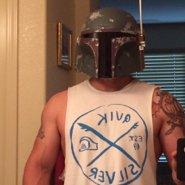
Menshen or threshold guardian are divine guardians of doors and gates in Chinese folk religions, used to protect against evil influences or to encourage the entrance of positive ones. February 12 is the traditional Chinese New Year, I hope you have a peaceful and prosperous new year. 除厄免灾: Removal of bad luck and avoidance of disasters 家宅平安: Keep peace for your home On my chest there's a Chinese character 福(means happiness、satisfied、fulfilled),and it‘s on inverted position. In Chinese it‘s a homonym,福到了=happiness have arrived I know stormtroopers shouldn't use lightsabers,but it's just for fan~1 point
-
Greetings all! I had a membership here in the past, but I guess it was purged. I have an old ArmorFX kit, with an MRCE helmet, that I hope to improve and bring up to a better standard. I've worn it a couple of times for Halloween, and whatnot, but I need to make it more comfortable to wear, and easier to put on. Hoping to learn lots as I get back into the swing of things!1 point
-
Many Google and FB images only appear for a small amount of time, here today gone tomorrow1 point
-
Thanks. I think I got it now. haha. So to illustrate what I'm struggling with... If I put straps here with the back plate in this position, the back arcs forward and overlaps the kidney on the ends. I've seen screenshots where it seems like this happens with the armor.1 point
-
Troopers! Just a quick note to remind everybody that I'm always on the lookout for new informative resources to add to this thread, so if you spot something not listed that may be helpful, send it my way! I definitely want to harness the hive mind for the ultimate goal of troopers helping troopers!1 point
-
Fantastic job!1 point
-
Hi Scott, glad to see your Centurion app. Just one request. Could you please add the link to your EIB approval to the top post? I'll be with you shortly.1 point
-
Nice LEGO TK, Paul! And nice progress with your build. In regards to your questions, here are my thoughts, which are essentially in agreement with yours. 1. Definitely take the bicep return edges down. You can remove them completely on the tops since they’ll be covered by the shoulder bells, and you can shave off in increments (and retesting) on the bottoms if you really want to maintain some armor “thickness.” 2. Wait on shortening the biceps until you have at least all your arm pieces on, if not also your torso. You’ll want to get a sense of proportions and spacing between pieces. 3. A hot water bath and reforming will be most effective with all, or almost all, of the return edges removed. You should be able to form it to your liking with multiple water baths. 4. One way you can minimize widening cover strips is to utilize shims. They supposedly take a lot of effort, but can have excellent results. You could also try using more canon width measurements on the front-facing strips, then widen them in the rear-facing ones. I believe that the raised ridges where the cover strips are to be situated on ATA biceps can actually be removed, since screen references don’t have them, just like the ridges on the rear calves. Such removal would assist with shimming, I would think, and hopefully other ATA builders can chime in on this. As you state, you’ll want all the front-facing strips to be relatively proportional to each other. Reaching out to your GML May also provide you with insight to what he or she will be wanting to see. Hope this helps. As I said, these thoughts are pretty much what you already had in mind, so hopefully this affirms your thinking.1 point
-
So today was the day I finally got the blaster and it looks great! I’m gonna try to post the pictures up here, out of the box I know I’ll need to add a spring, and paint the bolt, I don’t think I’m gonna do much weathering as I feel as elite soldiers of the imperial army we should have pristine armor AND blasters1 point
-
Correct RS shins are the same for both legs1 point
-
INTEREST LIST POSTED!1 point
-
Nice work on the upgrades, good luck with approval1 point
-
I'll pipe up and add one for Hellhounds Props since he hasn't been mentioned yet. He's a bit newer and out of CA but makes one of the nicest rubber blasters I've seen yet - specifically, the separate, metal scope rail is a great detail many other rubber blasters miss. Praetorian is excellent as well, but currently out of commission after hurricane damage from my understanding. Both are US based. --------- https://www.facebook.com/hellhounds.props/1 point
-
Please welcome to the ranks Centurion # 491- Josh (Silverback73) TK 20112 of the Star Garrison. Nice job, sir! Down to the single digits, folks. Only 9 spots left to be a part of FISD history!1 point
-
Thanks Dan! I've found your tips and vids here and on YouTube very helpful. Ok, so I completed Take 2 on the tears and traps pinstriping last night. I think they came out much better this time around. I still have to clean up some of the outside edges of the pinstripes (photos below). I also countersunk the screw holes on my ears today. I used a 7/64" drill bit for the screw holes. And I used a 1/4" drill bit to countersink the holes, BY HAND - no drill, just manually turned the bit by hand, as I've seen advised many times for better control. As you can see in the photo below, I used a scrap piece of ABS to drill holes and figure out the size drill bit that would work best for me. And on a side note, saw this shirt on Amazon and I had to pick one up for myself!1 point
-
Thanks man! Nothing like a nose full of plastic to help you displace a few unwanted brain-cells, right? I really can't be happier, I've been waiting to build my own kit for well over a decade. Now I just need to fit everything to size.1 point