Leaderboard



Popular Content
Showing content with the highest reputation on 01/03/2021 in Posts
-
WARNING: The following content may be controversial! DISCLAIMER: These are my opinions from years of experience, pure and simple. Over the years I have noticed many future Troopers doing an OT (Original Trilogy) TK ask about return edges before, during (and after) their build... If this is a subject that you are curious about, grab a cup of coffee or a tall glass of frosty blue milk (this is a long post, lol) and read on.... QUESTION: "What are they, what do they do, and should I leave them, trim them down some or remove them"? ANSWER: Return edges are part of the molding process and provide strength in certain areas on the edges of your armor. They also provide a heftier look to some pieces. To help you decide whether or not to keep them is why I started this thread. Here I will attempt to go into a few details about them. Know in advance that as mentioned I personally am NOT a fan of them in many areas for several reasons (listed below). Some people love them and some may disagree with my opinions... many of you may trooped for years with no problems which is AWESOME, but many folks have had issues and questions. 1. In most areas they are not screen accurate- In looking at the screen caps and film used armor photos below you will notice their scarcity. 2. They can (and in many cases will) get very uncomfortable- Many folks like the "thicker" look it gives their armor, but they can cut into you, especially in the area where your arm bends ("armor bite") and the groin area (chafing). As Troopers we do a lot of walking and arm bending carrying a weapon, so keep this in mind. 3. If aiming for higher levels they can cause fitting issues- Examples: A. If you leave them on your forearm openings and glue on the cover strips, they will need to be completely removed at the wrists for Centurion level, making the opening too wide. This can lead to you having to remove the cover strips, reduce the sides of the forearms and re-attach the strips. Quite a pain in the posterior plate to say the least. *** See EXAMPLE 1 below. B. If they are overly thick on the bottoms of your shoulder bells, they can prevent them from lying snug against the biceps. 4. They can cause splits/cracks- Especially on some armor areas. ABS is designed to flex, and in some cases a small amount of return edge is fine, but too much can cause stress on those areas. *** See EXAMPLE 2 below Over time that stress will take it's toll somewhere, and that is usually the return edge. Anovos armor is especially prone to this on the sides of the chest/back plates and neck openings. I suggest shimming these on the rear with ABS strips and E-6000 to prevent it. Let's start with the chest plate: Note how the ones below (including the back plate) have either no or minimal edges with no cracks or splits. Now here is a screen used one with a pretty prominent edge, Notice the stress crack. Now, onto the ab/kidney/back plate: To keep them in line and prevent them from overlapping, it is suggested that you LEAVE a fair amount of the edges on the top/bottoms of the kidney and bottom of the back plate, especially if using the "classic" strapping method. Yes, these can split/crack as well but not normally. Shoulder Bells Trimming off the entire edge on the bottoms is not only screen accurate (first two photos), it allows them to rest close to the bicep (bottom photo). Third photo shows "suggested" trim lines (red) of an untrimmed bicep. My recommendation is the blue line. Biceps/forearms For sheer comfort and a sleeker look, I recommend removing ALL of the top and bottom edges before fitting/gluing them. First, no one sees the tops (covered by the shoulder bell) and the bottoms can cut into your arms (armor bite). Suggested cut lines in red. Again, if you do get armor bite you will have to take them both completely apart, remove the edge and re-fit. Better to think ahead. Some (myself included) like to leave a bit of the return edge on the outside of the top of the forearm for a thicker look. However, I highly suggest removing all from the inside part (the "scoop") where your arm bends. Again, an armor bite issue. This should also be done BEFORE final fitting. Here are some screen used examples: For level 3 (Centurion) all of the return edge on the wrist opening must be removed, including the area inside the "hump" as seen below: Posterior (butt) plate: Again, it is suggested that you leave some of the return edge on the top (and bottom in most cases) to keep it from riding under/over the kidney. Now, the BOTTOM of the posterior plate is where we often find splitting issues. Should you leave some return edge? Sure! BUT(T), when trimming the corners, (see below) be SURE not to give it a sharp angle... this is where the trouble usually starts. Instead, give it a slightly rounded angle (as shown in green). Thigh tops The tops of the thighs are where we see a lot of questions. I recommend removing all the return edges from the entire upper parts, and here is why: As mentioned above, you will be doing a lot of walking. If you have the edges (or at least a large portion of them) intact, the friction and inside facing angles can really chafe the heck out of you, especially on the inside of the groin area. (Ouch). If there are sharp edges/points on the tops (below) these will poke into you. When trimming these, just follow the existing line. Also, if you do your final fitting, glue everything together and find this out afterward, you will have to take the entire thing apart, remove the return edges, trim down the sides and then re-build/glue them back together. The reason is that afterward the opening will be entirely too large and you will have a giant gap all the way around. Not a good look. Easier to do it beforehand, trust me. As seen below, there were no return edges (or at least minimal ones) used in the films. Sniper knee plate The bottom of this piece is an area often not trimmed enough. To allow it to sit flat (or very close to flat) against the top of the calf enough for the glue to adhere properly I suggest removing most if not all of the bottom edge. Note how in the first and third photos how the sniper knee is parallel to the front of the calf. Last up, a photo that best illustrates my point about return edges and how they were not really present in many places on ANH armor. *** Example 1. of what happens when you have to reduce the return edge(s) after attaching cover strips. NOTE: For the example below I am using an ATA bicep (first 3 photos). Be aware that ATA makes the "suggested" cut line on their return edges pretty slim (a GREAT thing in my opinion). As seen on the armor in the 4th photo, if followed, the "suggested" cut line makes the return edges much wider (red line). Top view Bottom view For the purposes of this tutorial, we will assume that the ATA has those wider suggested return edges. Okay, let's say you really like the thicker look the return edges give your armor, so you left them pretty wide during fitting and then glued on the cover strips. Enough to get your arm through with a little extra room. Should be good to go, correct? BUT, you find that after having your arm bent for a while they cut into you (armor bite), so you find you have to reduce or remove most or all of it. No biggie, right? Just break out the Lexan scissors or Dremel and cut away, leaving the cover strips attached. Easy! So you remove it and then you run into the fact that the opening is now enormous. This is not a good look, and can result in the piece(s) jangling around and not being approvable at higher levels (or even Basic depending on your GML). What I am getting at with the above info. is that if you decide to remove them, it's better to do it before final fitting/gluing. Side note: Many biceps have an unusual shape at the tops (in red, below) normally located on the inside. This can be completely removed. Doing this will not affect approval at any level, and is screen accurate. It sits under the shoulder bell so no one sees it anyway! Screen used bicep USELESS TRIVIA: Many have asked about the "thumbprint" that many armorers have on the left bicep (screen used example below). Some think it is so you can tell them apart, but I was speaking with Brian Muir a few years ago (he sculpted the original armor used in ANH) and asked him about it: "To be honest, I have no idea... it was not in my original sculpt, and must have been a mistake in casting". There you have it. *** EXAMPLE 2: What causes cracks/splits: ABS bends pretty well, just as it's designed to. BUT, when there are return edges involved that changes the game. For the below example I used a 2 inch wide strip of ABS with a 1/2 inch "return edge". Looks pretty solid, right? That's because the edge provides stability. Now I am bending it up/in to simulate use over time. (More than it normally gets bent in many cases, but only to prove a point). That stress has got to go somewhere, and it's the return edge that takes it all and gives way, again causing cracks/splits. The red arrow shows a weak area where the stress in concentrated and cracks can form. Even if trimmed off afterward that area will be prone to splitting, so a small shim behind it is suggested. To sum it up, return edges are not meant to bend a lot. I suggest inspecting your armor occasionally to spot any existing/potential cracks/splits so that you can catch them before they get worse. I hope this helps answer any basic questions you may have, and always feel free to ask more detailed ones here or offer differing opinions.1 point
-
Hey all, Figured I'd try to help put the hive mind to work and benefit from your knowledge of you're willing! I'm looking for the optimal solution for setting snaps at a high volume, in an ergonomic method. I've found a few things but am unsure if they'd serve my purpose of setting a large amount of Line 24, specifically, but hopefully many types of snaps and grommets. I've been using a pair of the purple-handled Dritz ones for a while, and honestly they're the best consistently so far, but the plastic bits at the ends are a weak point and do wear out and crack pretty quick. https://www.amazon.com/dp/B005BB5GYS/ref=cm_sw_r_cp_apa_fabc_saw8FbWDGSABA?_encoding=UTF8&psc=1 I got a pair of the snap-lock plier type, but mine tend to smash the head of the cap flat a bit and they don't snap crisply. https://www.amazon.com/dp/B07WZ7SR8S/ref=cm_sw_r_cp_apa_fabc_abw8FbKNC4BTM?_encoding=UTF8&psc=1 Something with an overhead pull, like a bottle corker/capper and/or bench mounted could be cool. https://www.amazon.com/dp/B08N48S9DJ/ref=cm_sw_r_cp_apa_fabc_fcw8Fb7BH6N5Z Anyone have suggestions or have a product or tool that they like? Let me know!1 point
-
TK-70017, a Rogue One Stormtrooper, reporting in! My journey started back in February, when I met up with a trooper and he showed me his costumes and the forums. I was hooked! I ordered my fiberglass R1TK bucket from Jimmiroquai and started working on it in April. In June I ordered his armor and two-piece undersuit. I finished just in time for Halloween and was approved as the 14th R1TK!! Let's see some more R1TKs!! My build thread and lessons learned: - I selected Jim's flexible fiberglass because I liked the crisp lines and thickness. It sounds more substantial than ABS when the pieces knock together, in my opinion. - Lots of sanding, spreading putty, and more sanding... - I spray painted with Rustoleum, about 6 cans of primer, 5 of satin white (for the interior), and 15 cans of gloss white. - I had issues with gloss clear overcoats, so I didn't do it, but that might've protected it better from some chipping that has already happened. - I used E6000, and then CA glue (when that started peeling away) to attach the ammo boxes to the belt. I may have to rivet them in the future... - The Gallery is insanely helpful in finding reference images! - In the words of @gmrhodes13, "Measure twice cut once (or in this case, trial fit then trim)." No blaster yet, but I'm looking into a 3D printer and will make an E-11 one of my first projects... A huge thanks to @11b30b4 and @TheRascalKing for documenting their R1TK processes, but especially to @gmrhodes13 for the constant and reliable insight!1 point
-
I don't use hovi speakers, I find the aker amp works well behind the chest, especially at larger noisy events, gives a nice distortion as well1 point
-
I prefer everything in the chest and just run the mic onto head, easy to take helmet on and off and less weight1 point
-
I trimmed most of the return edge off the bottom of the sniper plate, but notched the center front area so it would sit central on the coverstrip1 point
-
Looking good and no gaps1 point
-
Cut and glued on the 20mm outer cover strips. When dry I will do a final fit for the rear. I left some extra to trim about a half inch. Then do the cover strips.1 point
-
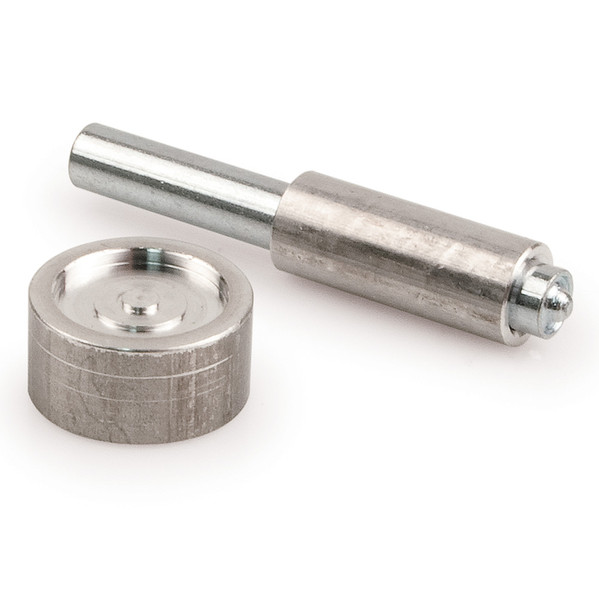
Hammer, philips head screwdriver to help split the post, then standard setting tool works for me.
 1 point
 -
Thank you for the heads up, I will make sure to do that!1 point
-
Thanks so much. That video was very helpful as well. Looks like buying it is a good idea, and then customize a little from there. Thank you.1 point
-
Here's an image of the strapping pack (although may be a little out of date) video It does come with the metal bracket system, a lot of people use this as they are screen accurate but be aware they can make cracks in the armor due to strain and movement over time, many add supports behind. Bracket supports How to here A lot of people make their own strapping, double snapping is a great idea for areas which will have strain on them with movement, customizing your strapping allows you to make any adjustments which can be difficult to do with the original bracket system1 point
-
E Komo Mai! My husband also ordered his ANH Stunt TK from Dave. We got to visit his workshop on Monday and it's neat to see the process. Looking forward to seeing your build progress. We're also reviewing all the info too, so appreciate how much there is to take in. Cheers!1 point
-
Happy New Year's to you all!!! I apologize for the delay with updating. Took a week off and stopped to smell the roses. I've done the 45's on the ammo belt, in hopes to comply with the suggested fixes. I believe this is the final step on my road to reparations? Here are some pictures of the completed belt rebuild. As always, I appreciate the time and energy you contribute, towards my application! I look forward to seeing your feedback, and await any instructions I will need to follow in hopes of obtaining the Centurion rank. Thank You!!!1 point
-
Happy New Year Troopers. 2020 was a challenging year for everyone, and I would like to thank you all for being here on FISD and supporting this wonderful community. 2021 hopefully gets better and better as the days go by and we can all see something that resembles a more normal life again. Stay well, stay safe, look after your family and keep paying it forward where you can1 point
-
Jeff, I am speechless. That review is truly amazing and I cannot thank you enough. Thank you for spending the time to put together the most detailed and helpful review I have ever read. Your feedback and observations are epic and deserve a true trooper high five for that. I am so glad you reached out to me for the scope and your request got me back into making scopes again with enthusiasm. Nothing pleases me more than to hear your satisfaction with what you got and paid for. I hope to make good on your suggestions as they are great ideas that will serve others well when they get a kit. Such a great documented review with all the pics too. Love seeing the finished product as well. I made so many of the kits in pieces but rarely find time to build them myself so its nice to see them ready to go on a blaster. Thank you a billion!!!!! This review will be linked from my BulldogProps page. Super helpful. Cheers Jeff!!!!!1 point