Leaderboard

Popular Content
Showing content with the highest reputation on 03/05/2022 in Posts
-
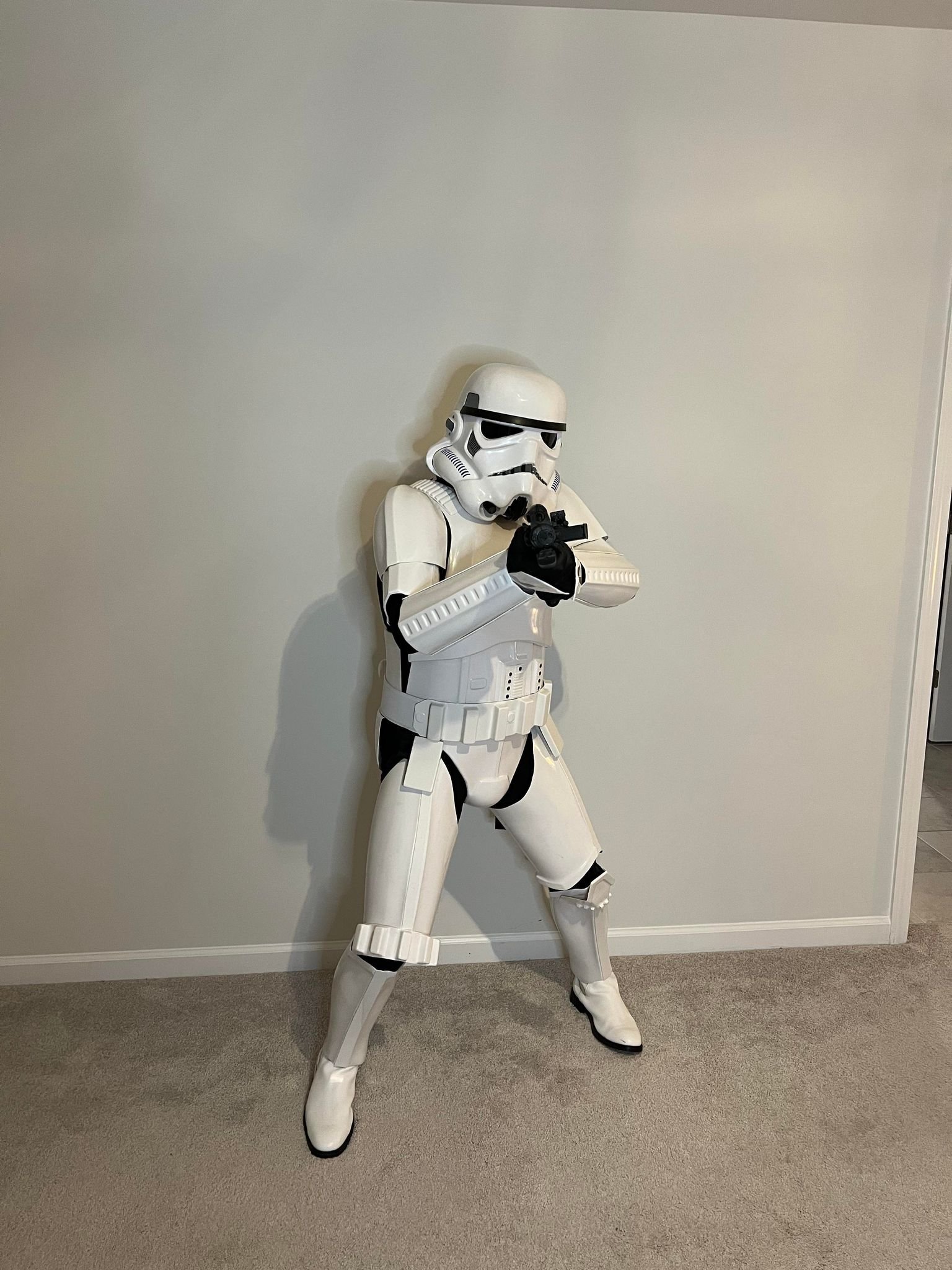
Name: Mario Reyes Height: 5'77" Weight: 176 lbs FISD Name: TKSpartan Garrison: Costa Rica Build Information Armor Maker: KB Props Helmet Maker: Anovos Boots: Local Shoemaker Gloves: Endor Finders Neck Seal and Fabric Gaskets: Geeky Pinks Undersuit Supplier: Stormtrooper Undersuit F11D Blaster: Resin / Unknown Full Body 1. ___ Front (Arms flat by side) 2. ___ Back (Arms flat by side) 3. ___ Left side (Arms raised) 4. ___ Right side (Arms raised) 5. ___ Action shot Armor Details 6. ___ Chest Plate 7. ___ Back Plate/Yoke (showing shoulder tabs) 8. ___ Chest/Back (Left side) 9. ___ Chest/Back (Right side) 10. ___ Yoke interior 11. ___ Thermal Detonator (Front) 12. ___ Thermal Detonator (right) 13. ___ Thermal Detonator (left) 14. ___ Shoulder Bell (top) 15. ___ Biceps (fronts showing greeblies) 16. ___ Forearms (close-up inside view) 17. ___ Forearms (close-up front view) 18. ___ Wrist Openings (close-up) 19. ___ Abdomen (front) 20. ___ Abdomen (left) 21. ___ Abdomen (right) 22. ___ Cod 23. ___ Posterior 24. ___ Thighs (outside view showing greeblies/holster base/holster) 25. ___ Shins (outside showing greeblies) 26. ___ Ankle Spats (outside, showing greeblies) HELMET DETAILS 27. ___ Front 28. ___ Right 29. ___ Left 30. ___ Rear ACCESSORIES 31. ___ Neck Seal 32. ___ Under suit 33. ___ Shoulder Gaskets 34. ___ Knee Gaskets 35. ___ Gloves (top, showing hand plates) 36. ___ Gloves (palms) 37. ___ Belt (left) 38. ___ Belt (right) 39. ___ Boots (showing tops/inside (zipper) WEAPON 40. ___ Left 41. ___ Right 42. ___ Rear 43. ___ Movable front handle (Centurion) 44. ___ Electronics/lights (Centurion) 45. ___ Functional holster Thank you gentlemen !2 points
-
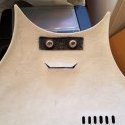
Hello all! I've seen a lot of confusion about wetsanding and polishing with the goal of increasing the shine. Lots of people mixing up terms and using the wrong methods/products at the wrong time/place. So I decided to put up a little tutorial to clear (hehe) things up. DISCLAIMER: I am not a professional, I do auto detailing in my spare time and have some experience with paint correction. This will be a pretty long tutorial but stick with me and hopefully we'll learn something 1. What is shine? To be brief: when something is really really flat, it will reflect a lot of light directly into your eyes, making it appear shiny. Below is an illustration of perfect paint reflecting light, this would look like glass: (Illustrations are not to scale, just there to give you an idea). But that's a show-car-130-hours-polishing-lunatic-finish. Most of us use spray cans, and spray cans suck. They spit out paint unevenly and most of it is propellant anyway. And we do it in conditions that are not optimal, so we end up with very uneven paint full of orange peel. For this tutorial i've prepared a plate of ABS plastic which has been painted black (easier to demonstrate) and clear coated. See this pic below? See that wrinkly, orange'y look to it? That's orange peel. Image 1: If we want to go the extra mile to get rid of this, we need to do.. 2. Sanding - Levelling the paint Using sandpaper is ABRASIVE. From Merriam-Webster: abrasive 1: causing damage, wear, or removal of surface material by grinding or rubbing Focus here being "removal of surface material". Every time you swipe that sandpaper it removes some material. What we are trying to achieve here is a flat surface, we are trying to flatten out those "peaks and valleys" by removing/flattening the clear coat. A sandpaper's "grit" determines if it's coarse or fine. A higher number means it's more fine, and will remove less material. A lower number means it's more coarse and will remove more material. You need to have enough clear coat on your piece to be able to do this correction. Or else you might sand into the basecoat or even the primer. Which sucks because that means a re-paint.. Here is a list of my PERSONAL sandpaper grits: 40 - Super coarse for doing an Alderaan on whatever you are working on, I never use this 80 - Very coarse, for removing material quickly. I use this on woodworking projects 120 - Quick removal of material while still being in control 180 - I use this to knock down 3D-print lines and filler 240 - Smoothing filler if i'm feeling a bit scared 320 - This is what I sand my parts with before primer 600 - For wetsanding my primer 800-1000 - Anything from color-coat/clear-coat fixes to wetsanding hard clear coat 1200 - For knocking down tough orange peel 1500 - For knocking down orange peel 2000 - For removing 1500 scratches 3000 - For removing 2000 scratches For this test piece I started with 1500 grit to knock down the orange peel as the clear coat I used is kind of soft. Keep in mind every sanding step in this tutorial is done wet/wetsanding. As you can see here i've flattened out the peel on most of the piece but I missed a spot. I went over it again and made sure the entire surface was equally "dull". After this I went over it with 2000 grit. This is a finer sandpaper and my goal here is to eliminate the scratches from the 1500 job. Notice the sanding marks going the opposite direction this time. This is a good way to gauge if you've successfully sanded away the marks from the previous steps. And finally I went over it with 3000 grit in the opposite direction to remove the 2000 grit marks. At this point you should start seeing some shine My camera really struggled to focus taking these pictures. And we're done with sanding! Dry off your parts and move on to.. 3. Polishing - Levelling the paint again, just very very little From Merriam-Webster: polished; polishing; polishes transitive verb 1 : to make smooth and glossy usually by friction : burnish 2 : to smooth, soften, or refine in manners or condition 3 : to bring to a highly developed, finished, or refined state : perfect This is were it gets confusing. Some people "put polish" on their car, but they really mean wax. Some people "polish in the wax". I mean, it's been used so much in so many different ways I know it seems confusing. For simplicitys sake: Polishing is the last step in paint correction. In the auto detailing world, if you would let's say fix orange peel on a car, you'd go through all the steps above then.. 1. Use a RUBBING COMPOUND with a machine to knock down the 3000 grit scratches, paint should look like ANH Vader at this point 2. Use a POLISH with a machine to further level the paint from the faint marks the COMPOUND may have left, at this point the paint will be as clear as an ESB Vader 3 Apply a WAX/SEALANT/COATING on top of the newly corrected and flawless paint, to protect it (and also add a tiny bit more shine). Wax/sealant/coatings will fill in tiny tiny scratches making the paint appear more shiny, but the effect will diminish as the wax deteriorates. Rubbing compound and Polishes are ABRASIVE, they will REMOVE clear coat, just like sandpaper, only much much finer. Think of them like liquid 30000 grit and 80000 grit sandpaper After drying off my newly 3000 grit sanded piece, I found a foam polishing pad, and primed it with some rubbing compound. Priming is basically just "feeding" the working area of your pad with polish so there are no dry spots. All my compounding/polishing was done by hand. I then applied some more compound to the pad, a pea sized drop and went to town in small, circular motions. Follow the instructions on your product. After finishing I wiped off with a microfibre cloth aaaand... BAM! Shine!! The compound I used was Menzerna FG-400. It's a really good compound, it finishes super fine and you could just leave it as it is right there! You can also use Meguiars M105 for this step. Or any "rubbing compound", as long as it doesn't have fillers/wax in it which will trick you and lie to you. You can also just straight up use a polish, but you might have to work a bit longer to achieve the same effect. Now on to the polishing, for this I did the exact same thing with a finer foam pad and Menzerna SF-3500 (Meguiars equivalent M205). Honestly it didn't make much of a difference since the FG-400 finished out so nicely. If you're using other products you may have to do this step if you see "haze" from the compounding step. I tried my best getting an in focus picture but my camera got so confused because of the shine 4. Wax/Sealant/Coating - Protective Layer A wax is a protective layer, it is NOT abrasive. At this stage you can add wax if you want, it'll protect the paint a bit and also give it a tiny bit more shine. It's the prep-work and COMPOUNDING/POLISHING that really makes it shine. I didn't bother adding wax to my polished test piece as it was already as good as it gets. I did however tape off the piece before polishing, so I had one side which was 3000 grit sanded, and one side that was polished. I tried adding wax to the sanded side: After buffing it off with a microfibre and removing tape: And that's it Hope you learned something! Any questions feel free to post them here and i'll do my best to answer. After closely inspecting the piece I can see some orange peel left, but that's from when I put my color coat on, which is under the clear coat.. oh well.. Spray cans suck!!1 point
-
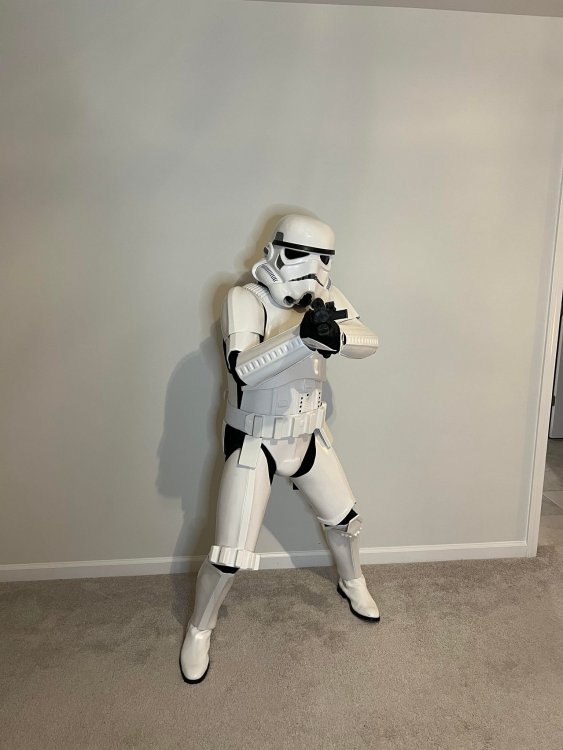
After an 8 year retirement I finally finished an old MTK kit I had. I submitted photos the other night and was approved. This kit is a stand in kit most likely though. I found it difficult to assemble because there really are not obvious trim lines and some of the pieces like the legs I trimmed years ago. In that time I have improved my making skills. I had a challenge ahead of me by having to work with bad cuts I did 8 years ago. The arms were easier because I had never trimmed them. The left leg I had trimmed way too much off. Massive credit to Trooperbay for working me up a set of replacement lower legs. I only used the left one and there is only a slight color difference. The helmet I am very happy with. I like my armor not looking super pristine and I can say "mission accomplished" lol. The funny part of my submission is I am wearing the same lower undersuit I did when trooping back in 2013. I have replacements on their way. I am really excited to be back in the 501st. I should have never left and I cannot wait to get out their trooping again. I also already built two versions of Kylo Ren and have a Snowy on order. After that is done I will reevaluate doing another TK and am currently exploring doing a FO.
 1 point
 -
A question about thighs, if I may: Do I trim the rear cover strips at this line?1 point
-
I know that RWA sell seperate parts and not only full kits, but, as Glen said, contact the suppliers and see what they say. All the best with your build1 point
-
i totally agree, the print lines are the biggest pain in my A$$ right now, lol but the more I make the better i get at their quality On a side note, look at that, i did my minimum 5 post so i can start selling the blaster, lol1 point
-
And some final pics for this thread. Until I can build my blaster rack, I needed a way to display the DLT. I bought some padded tool U shaped hooks from hardware store, drilled them into conveniently spaced wall studs, and hung the DLT. I now am sourcing a good case for it so I can bring it to troops without raising eye brows in hotel lobbies...1 point
-
https://www.501st.com/members/displaymember.php?userID=34638&costumeID=1261 point
-
You have to add a link to your 501st legion profile, have a look at others posts https://www.501st.com/members/displaymember.php?userID=34185&costumeID=1241 point
-
I signed up for a Star Wars Reads troop at a local library next week. They want us to read to the kids, which sounds like a ton of fun! I loved reading to my daughter when she was itsy. Since I have a week to repair things, I decided to be brave, kit up, and try to SIT DOWN. And I did! No breakage, snappage, or crackage. My butt is still 1 piece and shiny. Or maybe I just got lucky. But I did it! I had to post a proof pic. Now to practice reading and turning pages in my bucket and gloves.1 point