
Leaderboard



Popular Content
Showing content with the highest reputation on 02/23/2026 in Posts
-
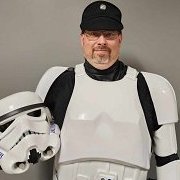
Hello There! From Lone Jack MO, my twin brother and I are big fans of what the 501st do and have been wanting to join the 70th Explores Garrison for a while now. We are both over 18 and we also thought that this could be a good way to make friends. We have both been eyeing the Stormtrooper Empire Pro Built Suit (ESB) from rspropmasters from what we know is 501st approved and if there is anyone from the 70th Explores Garrison wants to give us advice or heads up would very appreciated. We look forward to trooping with you guys soon!3 points
-
This isn’t quite the elaborate update I was hoping to post, but I have made some serious progress in the right direction. One thing I’ve realized after reviewing more of my early prints is that my original mindset of “this can be fixed with spot putty and filler primer” really doesn’t hold up in practice. For starters, 3D printed armor does not like aggressive sanding—especially with a DA sander and low grit paper. It tears up the outer walls and can even cause delamination (ask me how I know). Don’t do this. So… I’ve essentially reprinted just about everything, including the chest and back armor. At first glance, this original chest plate looked decent (a bold word), but on closer inspection I realized I’d driven the soldering iron far too deep in a few spots for it to be worth salvaging. The lower chest peak had a cavity forming, and there were several areas with mid-print layer shifts. It might look fixable in photos, but given the time already invested, it was honestly faster and smarter to just reprint the part. As many others have said: 3D printed armor is not for the faint of heart. Here’s the replacement chest plate in primer. It’s not perfect (yet), as I’ll still be doing some spot putty touch-ups on a few low spots that only became visible after primer—but it’s already miles better than the original print. A lot of that improvement comes from learning better seam placement and slicing strategies. Honestly, many of these issues probably wouldn’t exist if I’d started with a larger printer… but apparently I like creating my own challenges. The new back plate still has a few lingering issues. I initially thought my nozzle had loosened, but after reviewing camera footage of the print, I realized that on larger parts my supports were actually breaking mid-print. That introduced more flex than I was comfortable with, which led to shifting and surface inconsistencies. Some of the delamination I mentioned earlier from over sanding... but spot putty will fix this (well, I hope it will). It’s a bit of a catch-22. Printing in larger sections reduces seams, but it also forces steeper angles and riskier orientations—which can (and have) lead to print instability and [far] more post-processing than I anticipated. I’ve also primed all of the helmet greebles, and I went ahead and painted the vent backs. I’m not 100% convinced the color is perfectly screen accurate, but given how little of it is actually visible, I’m comfortable calling it “close enough.” The paint on these, ironically, came out flawless. Meanwhile, the helmet itself is still curing. I’ve been checking daily by lightly pressing a fingernail into the surface to test hardness… which unfortunately means I now have four fingernail marks to sand out. Could be worse—but it’s definitely sitting there judging me while I work. This is definitely one downside of Rustoleum compared to automotive acrylic systems. At this point I’m committed to this paint system for the helmet, since mixing paint types can cause reactions, but it does make me appreciate why experienced builders budget for higher-end coatings from the start. And as I promised... here's my first unofficial test-fit, featuring what I'm jokingly referring to as my "low budget mimban armor". The goal ultimately is to have a perfectly shiny suit, that may get a small bit of weathering as no suit in the SW universe is "perfect", right? But that's for a future date. Today, I think everything is scaled properly... but I'll let you all decide how off I am. I'm putting a small pause in continuing as this is a good point to make corrections if need be, rather than spending countless hours sanding and painting just to realize my scaling is off--feedback would be greatly apprecaited!!! And if you've stuck through this update, here’s my first unofficial test fit—featuring what I’m jokingly calling my “low-budget Mimban armor.” I say that, as I realized when "suiting up" just how many different stages in the paint process I was with these various pieces, and just how many I still have left to even prime. Fitment isn’t exactly perfect at this stage, which isn’t surprising since none of this has really been tested until now. On top of that, there are no mounting points, strapping, or real frame of reference yet, so my wife had to go into this completely blind with nothing but a roll of painter’s tape and the FISD R1TK galleries for guidance. All things considered, I think placement is close in most areas, but I know I’ve got an uphill battle ahead with the thighs and calves. The thighs are currently on the tighter side, so my plan is to carefully heat-form them with a heat gun to gain a bit of extra room around the knee joint. The upside is that they actually stay up on their own right now. Once I add proper strapping connected to the belt/abdomen (which I haven’t started yet), that should help significantly with support and positioning. The calves, on the other hand, are very loose. Either I need to start jogging and biking more… or I’ll end up adding some internal padding. I’ve already ordered the shin covers from Mr. Paul, which should arrive sometime next month, so that will complete the look and hide the front seam. Not pictured are the sniper knee and thigh ammo pack—both of which are printed, but painter’s tape was not enough to keep them in place for photos. Long term, the goal is a clean, glossy suit with (maybe) very light weathering later on (because let’s be honest, nothing in the Star Wars universe is perfectly pristine). But that’s a future problem. For now, my main priority is confirming scale and proportions before I sink any more hours into finishing work. If anything looks noticeably off, please don’t hesitate to point it out—I’d much rather correct it now than discover issues after everything is painted. I know it’s a little tricky to judge from just these photos (especially with painter’s tape holding more than half of it together), but any feedback at this stage is genuinely appreciated. Because of that, I’m putting a temporary pause on armor progress for the rest of the week so I can make adjustments where needed. My goal is to get everything dialed in for Level 1 at a minimum, and ultimately Level 2 once I’ve added the remaining soft parts like gloves, undersuit, and boots. In the meantime, I’ll be shifting focus toward the internal build and starting to order materials for the harness system—suspenders, nylon webbing, and what will likely be a copious amount of Velcro.1 point
-
The video does go over some shoretrooper specific stuff but most of these parts are going into the R1TK so thought it would be cool to do a vid on how it all works! https://www.facebook.com/reel/919078963812192/1 point
-
One more thing, years ago when Denix asked on FB is they should make the Sterling, I sent them a comprehensive email message explaining why the Sterling is important to both the militaria collectors as well as Star Wars collectors, and I also showed them the differences between L2A3 (ANH/ESB E-11 base) and Canadian C1 (ROTJ E-11 base), and they said they might make both (double the gun, double the fun).1 point


.thumb.png.69856e02550a2e6d07e44a2b1bda020c.png)
